Compare commits
67 Commits
2025-10-en
...
2025-05-en
| Author | SHA1 | Date | |
|---|---|---|---|

|
8c62ba7b28 | ||
|
|
71ee3012fb | ||
|
|
5ed12d6631 | ||
|
|
839b50a7a6 | ||
|
|
e0fdbfdb50 | ||
|
|
d9f53288f2 | ||
|
|
697e9cf9f7 | ||
|
|
6b06fa2b35 | ||
|
|
240b2a24e2 | ||

|
4bc97aa1b8 | ||
|
|
798dc2216c | ||
|
|
5117b27386 | ||
|
|
d2f736a850 | ||
|
|
01c374d0a4 | ||

|
eee44979c5 | ||
|
|
4d3bc06e30 | ||
|
|
229ab045b3 | ||
|
|
fe1a61eaeb | ||
|
|
9613589dea | ||
|
|
ca8865a10b | ||
|
|
f279bbea11 | ||
|
|
bc6100301e | ||
|
|
a32751636a | ||
|
|
4a0e23d131 | ||
|
|
6e987d1fca | ||
|
|
18b888009e | ||
|
|
36dd8bb695 | ||
|
|
395c5a38ab | ||
|
|
2b0d3b87ac | ||
|
|
a165e60407 | ||
|
|
3c13fd51dd | ||
|
|
324ad2fdd0 | ||
|
|
269ae79e30 | ||
|
|
39a15b3d7d | ||
|
|
9e7ed8cb49 | ||
|
|
06e7a47659 | ||
|
|
802e525f57 | ||
|
|
0f68f89840 | ||
|
|
b275342bd2 | ||
|
|
e11e97ccff | ||
|
|
023a9d0346 | ||
|
|
3f5eaae6b9 | ||
|
|
1634d5b5bc | ||
|
|
40418be55a | ||
|
|
04198b7f91 | ||
|
|
150c8fc768 | ||
|
|
e2af1bb057 | ||
|
|
d4c260aa4a | ||
|
|
89cd677b09 | ||
|
|
3008680c12 | ||
|
|
f7b8184617 | ||
|
|
a565c0979c | ||
|
|
7a11f03b5e | ||
|
|
b0760b99a5 | ||
|
|
bcb9c3003f | ||
|
|
99ce9b3a8a | ||
|
|
0ba602b533 | ||
|
|
d43c41e11e | ||
|
|
331309dc63 | ||
|
|
44146915e0 | ||
|
|
84996e739b | ||
|
|
2aea1f70b2 | ||
|
|
985e2ae42c | ||
|
|
ea58428a0c | ||
|
|
59e60786c0 | ||
|
|
af63cf1405 | ||
|
|
f9041807f6 |
@@ -9,7 +9,7 @@
|
||||
"forwardPorts": [],
|
||||
|
||||
//"postCreateCommand": "... install extra packages...",
|
||||
"postStartCommand": "dind.sh ; kind.sh",
|
||||
"postStartCommand": "dind.sh",
|
||||
|
||||
// This lets us use "docker-outside-docker".
|
||||
// Unfortunately, minikube, kind, etc. don't work very well that way;
|
||||
|
||||
1
.gitignore
vendored
@@ -17,7 +17,6 @@ slides/autopilot/state.yaml
|
||||
slides/index.html
|
||||
slides/past.html
|
||||
slides/slides.zip
|
||||
slides/_academy_*
|
||||
node_modules
|
||||
|
||||
### macOS ###
|
||||
|
||||
@@ -1,7 +1,7 @@
|
||||
FROM ruby:alpine
|
||||
RUN apk add --update build-base curl
|
||||
RUN gem install sinatra --version '~> 3'
|
||||
RUN gem install thin --version '~> 1'
|
||||
RUN gem install thin
|
||||
ADD hasher.rb /
|
||||
CMD ["ruby", "hasher.rb"]
|
||||
EXPOSE 80
|
||||
|
||||
@@ -1,33 +0,0 @@
|
||||
---
|
||||
apiVersion: apps/v1
|
||||
kind: Deployment
|
||||
metadata:
|
||||
labels:
|
||||
app: blue
|
||||
name: blue
|
||||
spec:
|
||||
replicas: 1
|
||||
selector:
|
||||
matchLabels:
|
||||
app: blue
|
||||
template:
|
||||
metadata:
|
||||
labels:
|
||||
app: blue
|
||||
spec:
|
||||
containers:
|
||||
- image: jpetazzo/color
|
||||
name: color
|
||||
---
|
||||
apiVersion: v1
|
||||
kind: Service
|
||||
metadata:
|
||||
labels:
|
||||
app: blue
|
||||
name: blue
|
||||
spec:
|
||||
ports:
|
||||
- name: "80"
|
||||
port: 80
|
||||
selector:
|
||||
app: blue
|
||||
@@ -1,12 +0,0 @@
|
||||
# This removes the haproxy Deployment.
|
||||
|
||||
apiVersion: kustomize.config.k8s.io/v1alpha1
|
||||
kind: Component
|
||||
|
||||
patches:
|
||||
- patch: |-
|
||||
$patch: delete
|
||||
kind: Deployment
|
||||
apiVersion: apps/v1
|
||||
metadata:
|
||||
name: haproxy
|
||||
@@ -1,14 +0,0 @@
|
||||
apiVersion: kustomize.config.k8s.io/v1alpha1
|
||||
kind: Component
|
||||
|
||||
# Within a Kustomization, it is not possible to specify in which
|
||||
# order transformations (patches, replacements, etc) should be
|
||||
# executed. If we want to execute transformations in a specific
|
||||
# order, one possibility is to put them in individual components,
|
||||
# and then invoke these components in the order we want.
|
||||
# It works, but it creates an extra level of indirection, which
|
||||
# reduces readability and complicates maintenance.
|
||||
|
||||
components:
|
||||
- setup
|
||||
- cleanup
|
||||
@@ -1,20 +0,0 @@
|
||||
global
|
||||
#log stdout format raw local0
|
||||
#daemon
|
||||
maxconn 32
|
||||
defaults
|
||||
#log global
|
||||
timeout client 1h
|
||||
timeout connect 1h
|
||||
timeout server 1h
|
||||
mode http
|
||||
option abortonclose
|
||||
frontend metrics
|
||||
bind :9000
|
||||
http-request use-service prometheus-exporter
|
||||
frontend ollama_frontend
|
||||
bind :8000
|
||||
default_backend ollama_backend
|
||||
maxconn 16
|
||||
backend ollama_backend
|
||||
server ollama_server localhost:11434 check
|
||||
@@ -1,39 +0,0 @@
|
||||
---
|
||||
apiVersion: apps/v1
|
||||
kind: Deployment
|
||||
metadata:
|
||||
labels:
|
||||
app: haproxy
|
||||
name: haproxy
|
||||
spec:
|
||||
selector:
|
||||
matchLabels:
|
||||
app: haproxy
|
||||
template:
|
||||
metadata:
|
||||
labels:
|
||||
app: haproxy
|
||||
spec:
|
||||
volumes:
|
||||
- name: haproxy
|
||||
configMap:
|
||||
name: haproxy
|
||||
containers:
|
||||
- image: haproxy:3.0
|
||||
name: haproxy
|
||||
volumeMounts:
|
||||
- name: haproxy
|
||||
mountPath: /usr/local/etc/haproxy
|
||||
readinessProbe:
|
||||
httpGet:
|
||||
port: 9000
|
||||
ports:
|
||||
- name: haproxy
|
||||
containerPort: 8000
|
||||
- name: metrics
|
||||
containerPort: 9000
|
||||
resources:
|
||||
requests:
|
||||
cpu: 0.05
|
||||
limits:
|
||||
cpu: 1
|
||||
@@ -1,75 +0,0 @@
|
||||
# This adds a sidecar to the ollama Deployment, by taking
|
||||
# the pod template and volumes from the haproxy Deployment.
|
||||
# The idea is to allow to run ollama+haproxy in two modes:
|
||||
# - separately (each with their own Deployment),
|
||||
# - together in the same Pod, sidecar-style.
|
||||
# The YAML files define how to run them separetely, and this
|
||||
# "replacements" directive fetches a specific volume and
|
||||
# a specific container from the haproxy Deployment, to add
|
||||
# them to the ollama Deployment.
|
||||
#
|
||||
# This would be simpler if kustomize allowed to append or
|
||||
# merge lists in "replacements"; but it doesn't seem to be
|
||||
# possible at the moment.
|
||||
#
|
||||
# It would be even better if kustomize allowed to perform
|
||||
# a strategic merge using a fieldPath as the source, because
|
||||
# we could merge both the containers and the volumes in a
|
||||
# single operation.
|
||||
#
|
||||
# Note that technically, it might be possible to layer
|
||||
# multiple kustomizations so that one generates the patch
|
||||
# to be used in another; but it wouldn't be very readable
|
||||
# or maintainable so we decided to not do that right now.
|
||||
#
|
||||
# However, the current approach (fetching fields one by one)
|
||||
# has an advantage: it could let us transform the haproxy
|
||||
# container into a real sidecar (i.e. an initContainer with
|
||||
# a restartPolicy=Always).
|
||||
|
||||
apiVersion: kustomize.config.k8s.io/v1alpha1
|
||||
kind: Component
|
||||
|
||||
resources:
|
||||
- haproxy.yaml
|
||||
|
||||
configMapGenerator:
|
||||
- name: haproxy
|
||||
files:
|
||||
- haproxy.cfg
|
||||
|
||||
replacements:
|
||||
- source:
|
||||
kind: Deployment
|
||||
name: haproxy
|
||||
fieldPath: spec.template.spec.volumes.[name=haproxy]
|
||||
targets:
|
||||
- select:
|
||||
kind: Deployment
|
||||
name: ollama
|
||||
fieldPaths:
|
||||
- spec.template.spec.volumes.[name=haproxy]
|
||||
options:
|
||||
create: true
|
||||
- source:
|
||||
kind: Deployment
|
||||
name: haproxy
|
||||
fieldPath: spec.template.spec.containers.[name=haproxy]
|
||||
targets:
|
||||
- select:
|
||||
kind: Deployment
|
||||
name: ollama
|
||||
fieldPaths:
|
||||
- spec.template.spec.containers.[name=haproxy]
|
||||
options:
|
||||
create: true
|
||||
- source:
|
||||
kind: Deployment
|
||||
name: haproxy
|
||||
fieldPath: spec.template.spec.containers.[name=haproxy].ports.[name=haproxy].containerPort
|
||||
targets:
|
||||
- select:
|
||||
kind: Service
|
||||
name: ollama
|
||||
fieldPaths:
|
||||
- spec.ports.[name=11434].targetPort
|
||||
@@ -1,34 +0,0 @@
|
||||
---
|
||||
apiVersion: apps/v1
|
||||
kind: Deployment
|
||||
metadata:
|
||||
labels:
|
||||
app: blue
|
||||
name: blue
|
||||
spec:
|
||||
replicas: 2
|
||||
selector:
|
||||
matchLabels:
|
||||
app: blue
|
||||
template:
|
||||
metadata:
|
||||
labels:
|
||||
app: blue
|
||||
spec:
|
||||
containers:
|
||||
- image: jpetazzo/color
|
||||
name: color
|
||||
ports:
|
||||
- containerPort: 80
|
||||
---
|
||||
apiVersion: v1
|
||||
kind: Service
|
||||
metadata:
|
||||
labels:
|
||||
app: blue
|
||||
name: blue
|
||||
spec:
|
||||
ports:
|
||||
- port: 80
|
||||
selector:
|
||||
app: blue
|
||||
@@ -1,94 +0,0 @@
|
||||
apiVersion: kustomize.config.k8s.io/v1beta1
|
||||
kind: Kustomization
|
||||
|
||||
# Each of these YAML files contains a Deployment and a Service.
|
||||
# The blue.yaml file is here just to demonstrate that the rest
|
||||
# of this Kustomization can be precisely scoped to the ollama
|
||||
# Deployment (and Service): the blue Deployment and Service
|
||||
# shouldn't be affected by our kustomize transformers.
|
||||
resources:
|
||||
- ollama.yaml
|
||||
- blue.yaml
|
||||
|
||||
buildMetadata:
|
||||
|
||||
# Add a label app.kubernetes.io/managed-by=kustomize-vX.Y.Z
|
||||
- managedByLabel
|
||||
|
||||
# Add an annotation config.kubernetes.io/origin, indicating:
|
||||
# - which file defined that resource;
|
||||
# - if it comes from a git repository, which one, and which
|
||||
# ref (tag, branch...) it was.
|
||||
- originAnnotations
|
||||
|
||||
# Add an annotation alpha.config.kubernetes.io/transformations
|
||||
# indicating which patches and other transformers have changed
|
||||
# each resource.
|
||||
- transformerAnnotations
|
||||
|
||||
# Let's generate a ConfigMap with literal values.
|
||||
# Note that this will actually add a suffix to the name of the
|
||||
# ConfigMaps (e.g.: ollama-8bk8bd8m76) and it will update all
|
||||
# references to the ConfigMap (e.g. in Deployment manifests)
|
||||
# accordingly. The suffix is a hash of the ConfigMap contents,
|
||||
# so that basically, if the ConfigMap is edited, any workload
|
||||
# using that ConfigMap will automatically do a rolling update.
|
||||
configMapGenerator:
|
||||
- name: ollama
|
||||
literals:
|
||||
- "model=gemma3:270m"
|
||||
- "prompt=If you visit Paris, I suggest that you"
|
||||
- "queue=4"
|
||||
name: ollama
|
||||
|
||||
patches:
|
||||
# The Deployment manifest in ollama.yaml doesn't specify
|
||||
# resource requests and limits, so that it can run on any
|
||||
# cluster (including resource-constrained local clusters
|
||||
# like KiND or minikube). The example belows add CPU
|
||||
# requests and limits using a strategic merge patch.
|
||||
# The patch is inlined here, but it could also be put
|
||||
# in a file and referenced with "path: xxxxxx.yaml".
|
||||
- patch: |
|
||||
apiVersion: apps/v1
|
||||
kind: Deployment
|
||||
metadata:
|
||||
name: ollama
|
||||
spec:
|
||||
template:
|
||||
spec:
|
||||
containers:
|
||||
- name: ollama
|
||||
resources:
|
||||
requests:
|
||||
cpu: 1
|
||||
limits:
|
||||
cpu: 2
|
||||
# This will have the same effect, with one little detail:
|
||||
# JSON patches cannot specify containers by name, so this
|
||||
# assumes that the ollama container is the first one in
|
||||
# the pod template (whereas the strategic merge patch can
|
||||
# use "merge keys" and identify containers by their name).
|
||||
#- target:
|
||||
# kind: Deployment
|
||||
# name: ollama
|
||||
# patch: |
|
||||
# - op: add
|
||||
# path: /spec/template/spec/containers/0/resources
|
||||
# value:
|
||||
# requests:
|
||||
# cpu: 1
|
||||
# limits:
|
||||
# cpu: 2
|
||||
|
||||
# A "component" is a bit like a "base", in the sense that
|
||||
# it lets us define some reusable resources and behaviors.
|
||||
# There is a key different, though:
|
||||
# - a "base" will be evaluated in isolation: it will
|
||||
# generate+transform some resources, then these resources
|
||||
# will be included in the main Kustomization;
|
||||
# - a "component" has access to all the resources that
|
||||
# have been generated by the main Kustomization, which
|
||||
# means that it can transform them (with patches etc).
|
||||
components:
|
||||
- add-haproxy-sidecar
|
||||
@@ -1,73 +0,0 @@
|
||||
---
|
||||
apiVersion: apps/v1
|
||||
kind: Deployment
|
||||
metadata:
|
||||
labels:
|
||||
app: ollama
|
||||
name: ollama
|
||||
spec:
|
||||
selector:
|
||||
matchLabels:
|
||||
app: ollama
|
||||
template:
|
||||
metadata:
|
||||
labels:
|
||||
app: ollama
|
||||
spec:
|
||||
volumes:
|
||||
- name: ollama
|
||||
hostPath:
|
||||
path: /opt/ollama
|
||||
type: DirectoryOrCreate
|
||||
containers:
|
||||
- image: ollama/ollama
|
||||
name: ollama
|
||||
env:
|
||||
- name: OLLAMA_MAX_QUEUE
|
||||
valueFrom:
|
||||
configMapKeyRef:
|
||||
name: ollama
|
||||
key: queue
|
||||
- name: MODEL
|
||||
valueFrom:
|
||||
configMapKeyRef:
|
||||
name: ollama
|
||||
key: model
|
||||
volumeMounts:
|
||||
- name: ollama
|
||||
mountPath: /root/.ollama
|
||||
lifecycle:
|
||||
postStart:
|
||||
exec:
|
||||
command:
|
||||
- /bin/sh
|
||||
- -c
|
||||
- ollama pull $MODEL
|
||||
livenessProbe:
|
||||
httpGet:
|
||||
port: 11434
|
||||
readinessProbe:
|
||||
exec:
|
||||
command:
|
||||
- /bin/sh
|
||||
- -c
|
||||
- ollama show $MODEL
|
||||
ports:
|
||||
- name: ollama
|
||||
containerPort: 11434
|
||||
---
|
||||
apiVersion: v1
|
||||
kind: Service
|
||||
metadata:
|
||||
labels:
|
||||
app: ollama
|
||||
name: ollama
|
||||
spec:
|
||||
ports:
|
||||
- name: "11434"
|
||||
port: 11434
|
||||
protocol: TCP
|
||||
targetPort: 11434
|
||||
selector:
|
||||
app: ollama
|
||||
type: ClusterIP
|
||||
@@ -1,5 +0,0 @@
|
||||
apiVersion: kustomize.config.k8s.io/v1beta1
|
||||
kind: Kustomization
|
||||
resources:
|
||||
- microservices
|
||||
- redis
|
||||
@@ -1,13 +0,0 @@
|
||||
apiVersion: kustomize.config.k8s.io/v1beta1
|
||||
kind: Kustomization
|
||||
resources:
|
||||
- microservices.yaml
|
||||
transformers:
|
||||
- |
|
||||
apiVersion: builtin
|
||||
kind: PrefixSuffixTransformer
|
||||
metadata:
|
||||
name: use-ghcr-io
|
||||
prefix: ghcr.io/
|
||||
fieldSpecs:
|
||||
- path: spec/template/spec/containers/image
|
||||
@@ -1,125 +0,0 @@
|
||||
---
|
||||
apiVersion: apps/v1
|
||||
kind: Deployment
|
||||
metadata:
|
||||
labels:
|
||||
app: hasher
|
||||
name: hasher
|
||||
spec:
|
||||
replicas: 1
|
||||
selector:
|
||||
matchLabels:
|
||||
app: hasher
|
||||
template:
|
||||
metadata:
|
||||
labels:
|
||||
app: hasher
|
||||
spec:
|
||||
containers:
|
||||
- image: dockercoins/hasher:v0.1
|
||||
name: hasher
|
||||
---
|
||||
apiVersion: v1
|
||||
kind: Service
|
||||
metadata:
|
||||
labels:
|
||||
app: hasher
|
||||
name: hasher
|
||||
spec:
|
||||
ports:
|
||||
- port: 80
|
||||
protocol: TCP
|
||||
targetPort: 80
|
||||
selector:
|
||||
app: hasher
|
||||
type: ClusterIP
|
||||
---
|
||||
apiVersion: apps/v1
|
||||
kind: Deployment
|
||||
metadata:
|
||||
labels:
|
||||
app: rng
|
||||
name: rng
|
||||
spec:
|
||||
replicas: 1
|
||||
selector:
|
||||
matchLabels:
|
||||
app: rng
|
||||
template:
|
||||
metadata:
|
||||
labels:
|
||||
app: rng
|
||||
spec:
|
||||
containers:
|
||||
- image: dockercoins/rng:v0.1
|
||||
name: rng
|
||||
---
|
||||
apiVersion: v1
|
||||
kind: Service
|
||||
metadata:
|
||||
labels:
|
||||
app: rng
|
||||
name: rng
|
||||
spec:
|
||||
ports:
|
||||
- port: 80
|
||||
protocol: TCP
|
||||
targetPort: 80
|
||||
selector:
|
||||
app: rng
|
||||
type: ClusterIP
|
||||
---
|
||||
apiVersion: apps/v1
|
||||
kind: Deployment
|
||||
metadata:
|
||||
labels:
|
||||
app: webui
|
||||
name: webui
|
||||
spec:
|
||||
replicas: 1
|
||||
selector:
|
||||
matchLabels:
|
||||
app: webui
|
||||
template:
|
||||
metadata:
|
||||
labels:
|
||||
app: webui
|
||||
spec:
|
||||
containers:
|
||||
- image: dockercoins/webui:v0.1
|
||||
name: webui
|
||||
---
|
||||
apiVersion: v1
|
||||
kind: Service
|
||||
metadata:
|
||||
labels:
|
||||
app: webui
|
||||
name: webui
|
||||
spec:
|
||||
ports:
|
||||
- port: 80
|
||||
protocol: TCP
|
||||
targetPort: 80
|
||||
selector:
|
||||
app: webui
|
||||
type: NodePort
|
||||
---
|
||||
apiVersion: apps/v1
|
||||
kind: Deployment
|
||||
metadata:
|
||||
labels:
|
||||
app: worker
|
||||
name: worker
|
||||
spec:
|
||||
replicas: 1
|
||||
selector:
|
||||
matchLabels:
|
||||
app: worker
|
||||
template:
|
||||
metadata:
|
||||
labels:
|
||||
app: worker
|
||||
spec:
|
||||
containers:
|
||||
- image: dockercoins/worker:v0.1
|
||||
name: worker
|
||||
@@ -1,4 +0,0 @@
|
||||
apiVersion: kustomize.config.k8s.io/v1beta1
|
||||
kind: Kustomization
|
||||
resources:
|
||||
- redis.yaml
|
||||
@@ -1,35 +0,0 @@
|
||||
---
|
||||
apiVersion: apps/v1
|
||||
kind: Deployment
|
||||
metadata:
|
||||
labels:
|
||||
app: redis
|
||||
name: redis
|
||||
spec:
|
||||
replicas: 1
|
||||
selector:
|
||||
matchLabels:
|
||||
app: redis
|
||||
template:
|
||||
metadata:
|
||||
labels:
|
||||
app: redis
|
||||
spec:
|
||||
containers:
|
||||
- image: redis
|
||||
name: redis
|
||||
---
|
||||
apiVersion: v1
|
||||
kind: Service
|
||||
metadata:
|
||||
labels:
|
||||
app: redis
|
||||
name: redis
|
||||
spec:
|
||||
ports:
|
||||
- port: 6379
|
||||
protocol: TCP
|
||||
targetPort: 6379
|
||||
selector:
|
||||
app: redis
|
||||
type: ClusterIP
|
||||
@@ -1,160 +0,0 @@
|
||||
---
|
||||
apiVersion: apps/v1
|
||||
kind: Deployment
|
||||
metadata:
|
||||
labels:
|
||||
app: hasher
|
||||
name: hasher
|
||||
spec:
|
||||
replicas: 1
|
||||
selector:
|
||||
matchLabels:
|
||||
app: hasher
|
||||
template:
|
||||
metadata:
|
||||
labels:
|
||||
app: hasher
|
||||
spec:
|
||||
containers:
|
||||
- image: dockercoins/hasher:v0.1
|
||||
name: hasher
|
||||
---
|
||||
apiVersion: v1
|
||||
kind: Service
|
||||
metadata:
|
||||
labels:
|
||||
app: hasher
|
||||
name: hasher
|
||||
spec:
|
||||
ports:
|
||||
- port: 80
|
||||
protocol: TCP
|
||||
targetPort: 80
|
||||
selector:
|
||||
app: hasher
|
||||
type: ClusterIP
|
||||
---
|
||||
apiVersion: apps/v1
|
||||
kind: Deployment
|
||||
metadata:
|
||||
labels:
|
||||
app: redis
|
||||
name: redis
|
||||
spec:
|
||||
replicas: 1
|
||||
selector:
|
||||
matchLabels:
|
||||
app: redis
|
||||
template:
|
||||
metadata:
|
||||
labels:
|
||||
app: redis
|
||||
spec:
|
||||
containers:
|
||||
- image: redis
|
||||
name: redis
|
||||
---
|
||||
apiVersion: v1
|
||||
kind: Service
|
||||
metadata:
|
||||
labels:
|
||||
app: redis
|
||||
name: redis
|
||||
spec:
|
||||
ports:
|
||||
- port: 6379
|
||||
protocol: TCP
|
||||
targetPort: 6379
|
||||
selector:
|
||||
app: redis
|
||||
type: ClusterIP
|
||||
---
|
||||
apiVersion: apps/v1
|
||||
kind: Deployment
|
||||
metadata:
|
||||
labels:
|
||||
app: rng
|
||||
name: rng
|
||||
spec:
|
||||
replicas: 1
|
||||
selector:
|
||||
matchLabels:
|
||||
app: rng
|
||||
template:
|
||||
metadata:
|
||||
labels:
|
||||
app: rng
|
||||
spec:
|
||||
containers:
|
||||
- image: dockercoins/rng:v0.1
|
||||
name: rng
|
||||
---
|
||||
apiVersion: v1
|
||||
kind: Service
|
||||
metadata:
|
||||
labels:
|
||||
app: rng
|
||||
name: rng
|
||||
spec:
|
||||
ports:
|
||||
- port: 80
|
||||
protocol: TCP
|
||||
targetPort: 80
|
||||
selector:
|
||||
app: rng
|
||||
type: ClusterIP
|
||||
---
|
||||
apiVersion: apps/v1
|
||||
kind: Deployment
|
||||
metadata:
|
||||
labels:
|
||||
app: webui
|
||||
name: webui
|
||||
spec:
|
||||
replicas: 1
|
||||
selector:
|
||||
matchLabels:
|
||||
app: webui
|
||||
template:
|
||||
metadata:
|
||||
labels:
|
||||
app: webui
|
||||
spec:
|
||||
containers:
|
||||
- image: dockercoins/webui:v0.1
|
||||
name: webui
|
||||
---
|
||||
apiVersion: v1
|
||||
kind: Service
|
||||
metadata:
|
||||
labels:
|
||||
app: webui
|
||||
name: webui
|
||||
spec:
|
||||
ports:
|
||||
- port: 80
|
||||
protocol: TCP
|
||||
targetPort: 80
|
||||
selector:
|
||||
app: webui
|
||||
type: NodePort
|
||||
---
|
||||
apiVersion: apps/v1
|
||||
kind: Deployment
|
||||
metadata:
|
||||
labels:
|
||||
app: worker
|
||||
name: worker
|
||||
spec:
|
||||
replicas: 1
|
||||
selector:
|
||||
matchLabels:
|
||||
app: worker
|
||||
template:
|
||||
metadata:
|
||||
labels:
|
||||
app: worker
|
||||
spec:
|
||||
containers:
|
||||
- image: dockercoins/worker:v0.1
|
||||
name: worker
|
||||
@@ -1,30 +0,0 @@
|
||||
apiVersion: kustomize.config.k8s.io/v1beta1
|
||||
kind: Kustomization
|
||||
resources:
|
||||
- dockercoins.yaml
|
||||
replacements:
|
||||
- sourceValue: ghcr.io/dockercoins
|
||||
targets:
|
||||
- select:
|
||||
kind: Deployment
|
||||
labelSelector: "app in (hasher,rng,webui,worker)"
|
||||
# It will soon be possible to use regexes in replacement selectors,
|
||||
# meaning that the "labelSelector:" above can be replaced with the
|
||||
# following "name:" selector which is a tiny bit simpler:
|
||||
#name: hasher|rng|webui|worker
|
||||
# Regex support in replacement selectors was added by this PR:
|
||||
# https://github.com/kubernetes-sigs/kustomize/pull/5863
|
||||
# This PR was merged in August 2025, but as of October 2025, the
|
||||
# latest release of Kustomize is 5.7.1, which was released in July.
|
||||
# Hopefully the feature will be available in the next release :)
|
||||
# Another possibility would be to select all Deployments, and then
|
||||
# reject the one(s) for which we don't want to update the registry;
|
||||
# for instance:
|
||||
#reject:
|
||||
# kind: Deployment
|
||||
# name: redis
|
||||
fieldPaths:
|
||||
- spec.template.spec.containers.*.image
|
||||
options:
|
||||
delimiter: "/"
|
||||
index: 0
|
||||
@@ -66,7 +66,7 @@ Here is where we look for credentials for each provider:
|
||||
- Civo: CLI configuration file (`~/.civo.json`)
|
||||
- Digital Ocean: CLI configuration file (`~/.config/doctl/config.yaml`)
|
||||
- Exoscale: CLI configuration file (`~/.config/exoscale/exoscale.toml`)
|
||||
- Google Cloud: we're using "Application Default Credentials (ADC)"; run `gcloud auth application-default login`; note that we'll use the default "project" set in `gcloud` unless you set the `GOOGLE_PROJECT` environment variable
|
||||
- Google Cloud: FIXME, note that the project name is currently hard-coded to `prepare-tf`
|
||||
- Hetzner: CLI configuration file (`~/.config/hcloud/cli.toml`)
|
||||
- Linode: CLI configuration file (`~/.config/linode-cli`)
|
||||
- OpenStack: you will need to write a tfvars file (check [that exemple](terraform/virtual-machines/openstack/tfvars.example))
|
||||
|
||||
@@ -5,22 +5,16 @@
|
||||
# 10% CPU
|
||||
# (See https://docs.google.com/document/d/1n0lwp6rQKQUIuo_A5LQ1dgCzrmjkDjmDtNj1Jn92UrI)
|
||||
# PRO2-XS = 4 core, 16 gb
|
||||
#
|
||||
# With vspod:
|
||||
# 800 MB RAM
|
||||
# 33% CPU
|
||||
#
|
||||
|
||||
set -e
|
||||
|
||||
KONKTAG=konk
|
||||
PROVIDER=linode
|
||||
STUDENTS=5
|
||||
PROVIDER=scaleway
|
||||
STUDENTS=30
|
||||
|
||||
case "$PROVIDER" in
|
||||
linode)
|
||||
export TF_VAR_node_size=g6-standard-6
|
||||
export TF_VAR_location=fr-par
|
||||
export TF_VAR_location=us-east
|
||||
;;
|
||||
scaleway)
|
||||
export TF_VAR_node_size=PRO2-XS
|
||||
@@ -34,13 +28,11 @@ esac
|
||||
export KUBECONFIG=~/kubeconfig
|
||||
|
||||
if [ "$PROVIDER" = "kind" ]; then
|
||||
kind create cluster --name $KONKTAG
|
||||
kind create cluster --name konk
|
||||
ADDRTYPE=InternalIP
|
||||
else
|
||||
if ! [ -f tags/$KONKTAG/stage2/kubeconfig.101 ]; then
|
||||
./labctl create --mode mk8s --settings settings/konk.env --provider $PROVIDER --tag $KONKTAG
|
||||
fi
|
||||
cp tags/$KONKTAG/stage2/kubeconfig.101 $KUBECONFIG
|
||||
./labctl create --mode mk8s --settings settings/konk.env --provider $PROVIDER --tag konk
|
||||
cp tags/konk/stage2/kubeconfig.101 $KUBECONFIG
|
||||
ADDRTYPE=ExternalIP
|
||||
fi
|
||||
|
||||
|
||||
@@ -270,27 +270,7 @@ _cmd_create() {
|
||||
|
||||
ln -s ../../$SETTINGS tags/$TAG/settings.env.orig
|
||||
cp $SETTINGS tags/$TAG/settings.env
|
||||
|
||||
# For Google Cloud, it is necessary to specify which "project" to use.
|
||||
# Unfortunately, the Terraform provider doesn't seem to have a way
|
||||
# to detect which Google Cloud project you want to use; it has to be
|
||||
# specified one way or another. Let's decide that it should be set with
|
||||
# the GOOGLE_PROJECT env var; and if that var is not set, we'll try to
|
||||
# figure it out from gcloud.
|
||||
# (See https://github.com/hashicorp/terraform-provider-google/issues/10907#issuecomment-1015721600)
|
||||
# Since we need that variable to be set each time we'll call Terraform
|
||||
# (e.g. when destroying the environment), let's save it to the settings.env
|
||||
# file.
|
||||
if [ "$PROVIDER" = "googlecloud" ]; then
|
||||
if ! [ "$GOOGLE_PROJECT" ]; then
|
||||
info "PROVIDER=googlecloud but GOOGLE_PROJECT is not set. Detecting it."
|
||||
GOOGLE_PROJECT=$(gcloud config get project)
|
||||
info "GOOGLE_PROJECT will be set to '$GOOGLE_PROJECT'."
|
||||
fi
|
||||
echo "export GOOGLE_PROJECT=$GOOGLE_PROJECT" >> tags/$TAG/settings.env
|
||||
fi
|
||||
|
||||
. tags/$TAG/settings.env
|
||||
. $SETTINGS
|
||||
|
||||
echo $MODE > tags/$TAG/mode
|
||||
echo $PROVIDER > tags/$TAG/provider
|
||||
@@ -503,7 +483,7 @@ _cmd_kubebins() {
|
||||
curl -L https://github.com/etcd-io/etcd/releases/download/$ETCD_VERSION/etcd-$ETCD_VERSION-linux-$ARCH.tar.gz \
|
||||
| sudo tar --strip-components=1 --wildcards -zx '*/etcd' '*/etcdctl'
|
||||
fi
|
||||
if ! [ -x kube-apiserver ]; then
|
||||
if ! [ -x hyperkube ]; then
|
||||
##VERSION##
|
||||
curl -L https://dl.k8s.io/$K8SBIN_VERSION/kubernetes-server-linux-$ARCH.tar.gz \
|
||||
| sudo tar --strip-components=3 -zx \
|
||||
@@ -1238,17 +1218,14 @@ fi
|
||||
"
|
||||
}
|
||||
|
||||
_cmd ssh "Open an SSH session to a node (first one by default)"
|
||||
_cmd ssh "Open an SSH session to the first node of a tag"
|
||||
_cmd_ssh() {
|
||||
TAG=$1
|
||||
need_tag
|
||||
if [ "$2" ]; then
|
||||
ssh -l ubuntu -i tags/$TAG/id_rsa $2
|
||||
else
|
||||
IP=$(head -1 tags/$TAG/ips.txt)
|
||||
info "Logging into $IP (default password: $USER_PASSWORD)"
|
||||
ssh $SSHOPTS $USER_LOGIN@$IP
|
||||
fi
|
||||
IP=$(head -1 tags/$TAG/ips.txt)
|
||||
info "Logging into $IP (default password: $USER_PASSWORD)"
|
||||
ssh $SSHOPTS $USER_LOGIN@$IP
|
||||
|
||||
}
|
||||
|
||||
_cmd tags "List groups of VMs known locally"
|
||||
|
||||
@@ -23,14 +23,6 @@ pssh() {
|
||||
# necessary - or down to zero, too.
|
||||
sleep ${PSSH_DELAY_PRE-1}
|
||||
|
||||
# When things go wrong, it's convenient to ask pssh to show the output
|
||||
# of the failed command. Let's make that easy with a DEBUG env var.
|
||||
if [ "$DEBUG" ]; then
|
||||
PSSH_I=-i
|
||||
else
|
||||
PSSH_I=""
|
||||
fi
|
||||
|
||||
$(which pssh || which parallel-ssh) -h $HOSTFILE -l ubuntu \
|
||||
--par ${PSSH_PARALLEL_CONNECTIONS-100} \
|
||||
--timeout 300 \
|
||||
@@ -39,6 +31,5 @@ pssh() {
|
||||
-O UserKnownHostsFile=/dev/null \
|
||||
-O StrictHostKeyChecking=no \
|
||||
-O ForwardAgent=yes \
|
||||
$PSSH_I \
|
||||
"$@"
|
||||
}
|
||||
|
||||
@@ -2,11 +2,7 @@ terraform {
|
||||
required_providers {
|
||||
kubernetes = {
|
||||
source = "hashicorp/kubernetes"
|
||||
version = "~> 2.38.0"
|
||||
}
|
||||
helm = {
|
||||
source = "hashicorp/helm"
|
||||
version = "~> 3.0"
|
||||
version = "2.16.1"
|
||||
}
|
||||
}
|
||||
}
|
||||
@@ -20,7 +16,7 @@ provider "kubernetes" {
|
||||
|
||||
provider "helm" {
|
||||
alias = "cluster_${index}"
|
||||
kubernetes = {
|
||||
kubernetes {
|
||||
config_path = "./kubeconfig.${index}"
|
||||
}
|
||||
}
|
||||
@@ -55,37 +51,42 @@ resource "helm_release" "shpod_${index}" {
|
||||
name = "shpod"
|
||||
namespace = "shpod"
|
||||
create_namespace = false
|
||||
values = [
|
||||
yamlencode({
|
||||
service = {
|
||||
type = "NodePort"
|
||||
}
|
||||
resources = {
|
||||
requests = {
|
||||
cpu = "100m"
|
||||
memory = "500M"
|
||||
}
|
||||
limits = {
|
||||
cpu = "1"
|
||||
memory = "1000M"
|
||||
}
|
||||
}
|
||||
persistentVolume = {
|
||||
enabled = true
|
||||
}
|
||||
ssh = {
|
||||
password = random_string.shpod_${index}.result
|
||||
}
|
||||
rbac = {
|
||||
cluster = {
|
||||
clusterRoles = [ "cluster-admin" ]
|
||||
}
|
||||
}
|
||||
codeServer = {
|
||||
enabled = true
|
||||
}
|
||||
})
|
||||
]
|
||||
set {
|
||||
name = "service.type"
|
||||
value = "NodePort"
|
||||
}
|
||||
set {
|
||||
name = "resources.requests.cpu"
|
||||
value = "100m"
|
||||
}
|
||||
set {
|
||||
name = "resources.requests.memory"
|
||||
value = "500M"
|
||||
}
|
||||
set {
|
||||
name = "resources.limits.cpu"
|
||||
value = "1"
|
||||
}
|
||||
set {
|
||||
name = "resources.limits.memory"
|
||||
value = "1000M"
|
||||
}
|
||||
set {
|
||||
name = "persistentVolume.enabled"
|
||||
value = "true"
|
||||
}
|
||||
set {
|
||||
name = "ssh.password"
|
||||
value = random_string.shpod_${index}.result
|
||||
}
|
||||
set {
|
||||
name = "rbac.cluster.clusterRoles"
|
||||
value = "{cluster-admin}"
|
||||
}
|
||||
set {
|
||||
name = "codeServer.enabled"
|
||||
value = "true"
|
||||
}
|
||||
}
|
||||
|
||||
resource "helm_release" "metrics_server_${index}" {
|
||||
@@ -100,36 +101,10 @@ resource "helm_release" "metrics_server_${index}" {
|
||||
name = "metrics-server"
|
||||
namespace = "metrics-server"
|
||||
create_namespace = true
|
||||
values = [
|
||||
yamlencode({
|
||||
args = [ "--kubelet-insecure-tls" ]
|
||||
})
|
||||
]
|
||||
}
|
||||
|
||||
# As of October 2025, the ebs-csi-driver addon (which is used on EKS
|
||||
# to provision persistent volumes) doesn't automatically create a
|
||||
# StorageClass. Here, we're trying to detect the DaemonSet created
|
||||
# by the ebs-csi-driver; and if we find it, we create the corresponding
|
||||
# StorageClass.
|
||||
data "kubernetes_resources" "ebs_csi_node_${index}" {
|
||||
provider = kubernetes.cluster_${index}
|
||||
api_version = "apps/v1"
|
||||
kind = "DaemonSet"
|
||||
label_selector = "app.kubernetes.io/name=aws-ebs-csi-driver"
|
||||
namespace = "kube-system"
|
||||
}
|
||||
|
||||
resource "kubernetes_storage_class" "ebs_csi_${index}" {
|
||||
count = (length(data.kubernetes_resources.ebs_csi_node_${index}.objects) > 0) ? 1 : 0
|
||||
provider = kubernetes.cluster_${index}
|
||||
metadata {
|
||||
name = "ebs-csi"
|
||||
annotations = {
|
||||
"storageclass.kubernetes.io/is-default-class" = "true"
|
||||
}
|
||||
set {
|
||||
name = "args"
|
||||
value = "{--kubelet-insecure-tls}"
|
||||
}
|
||||
storage_provisioner = "ebs.csi.aws.com"
|
||||
}
|
||||
|
||||
# This section here deserves a little explanation.
|
||||
@@ -161,14 +136,8 @@ resource "kubernetes_storage_class" "ebs_csi_${index}" {
|
||||
# Lastly - in the ConfigMap we actually put both the original kubeconfig,
|
||||
# and the one where we injected our new user (just in case we want to
|
||||
# use or look at the original for any reason).
|
||||
#
|
||||
# One more thing: the kubernetes.io/kube-apiserver-client signer is
|
||||
# disabled on EKS, so... we don't generate that ConfigMap on EKS.
|
||||
# To detect if we're on EKS, we're looking for the ebs-csi-node DaemonSet.
|
||||
# (Which means that the detection will break if the ebs-csi addon is missing.)
|
||||
|
||||
resource "kubernetes_config_map" "kubeconfig_${index}" {
|
||||
count = (length(data.kubernetes_resources.ebs_csi_node_${index}.objects) > 0) ? 0 : 1
|
||||
provider = kubernetes.cluster_${index}
|
||||
metadata {
|
||||
name = "kubeconfig"
|
||||
@@ -194,7 +163,7 @@ resource "kubernetes_config_map" "kubeconfig_${index}" {
|
||||
- name: cluster-admin
|
||||
user:
|
||||
client-key-data: $${base64encode(tls_private_key.cluster_admin_${index}.private_key_pem)}
|
||||
client-certificate-data: $${base64encode(kubernetes_certificate_signing_request_v1.cluster_admin_${index}[0].certificate)}
|
||||
client-certificate-data: $${base64encode(kubernetes_certificate_signing_request_v1.cluster_admin_${index}.certificate)}
|
||||
EOT
|
||||
}
|
||||
}
|
||||
@@ -232,7 +201,6 @@ resource "kubernetes_cluster_role_binding" "shpod_cluster_admin_${index}" {
|
||||
}
|
||||
|
||||
resource "kubernetes_certificate_signing_request_v1" "cluster_admin_${index}" {
|
||||
count = (length(data.kubernetes_resources.ebs_csi_node_${index}.objects) > 0) ? 0 : 1
|
||||
provider = kubernetes.cluster_${index}
|
||||
metadata {
|
||||
name = "cluster-admin"
|
||||
|
||||
@@ -23,7 +23,7 @@ variable "node_size" {
|
||||
}
|
||||
|
||||
variable "location" {
|
||||
type = string
|
||||
type = string
|
||||
default = null
|
||||
}
|
||||
|
||||
|
||||
@@ -1,45 +1,60 @@
|
||||
data "aws_eks_cluster_versions" "_" {
|
||||
default_only = true
|
||||
# Taken from:
|
||||
# https://github.com/hashicorp/learn-terraform-provision-eks-cluster/blob/main/main.tf
|
||||
|
||||
data "aws_availability_zones" "available" {}
|
||||
|
||||
module "vpc" {
|
||||
source = "terraform-aws-modules/vpc/aws"
|
||||
version = "3.19.0"
|
||||
|
||||
name = var.cluster_name
|
||||
|
||||
cidr = "10.0.0.0/16"
|
||||
azs = slice(data.aws_availability_zones.available.names, 0, 3)
|
||||
|
||||
private_subnets = ["10.0.1.0/24", "10.0.2.0/24", "10.0.3.0/24"]
|
||||
public_subnets = ["10.0.4.0/24", "10.0.5.0/24", "10.0.6.0/24"]
|
||||
|
||||
enable_nat_gateway = true
|
||||
single_nat_gateway = true
|
||||
enable_dns_hostnames = true
|
||||
|
||||
public_subnet_tags = {
|
||||
"kubernetes.io/cluster/${var.cluster_name}" = "shared"
|
||||
"kubernetes.io/role/elb" = 1
|
||||
}
|
||||
|
||||
private_subnet_tags = {
|
||||
"kubernetes.io/cluster/${var.cluster_name}" = "shared"
|
||||
"kubernetes.io/role/internal-elb" = 1
|
||||
}
|
||||
}
|
||||
|
||||
module "eks" {
|
||||
source = "terraform-aws-modules/eks/aws"
|
||||
version = "~> 21.0"
|
||||
name = var.cluster_name
|
||||
kubernetes_version = data.aws_eks_cluster_versions._.cluster_versions[0].cluster_version
|
||||
vpc_id = local.vpc_id
|
||||
subnet_ids = local.subnet_ids
|
||||
endpoint_public_access = true
|
||||
enable_cluster_creator_admin_permissions = true
|
||||
upgrade_policy = {
|
||||
# The default policy is EXTENDED, which incurs additional costs
|
||||
# when running an old control plane. We don't advise to run old
|
||||
# control planes, but we also don't want to incur costs if an
|
||||
# old version is chosen accidentally.
|
||||
support_type = "STANDARD"
|
||||
}
|
||||
source = "terraform-aws-modules/eks/aws"
|
||||
version = "19.5.1"
|
||||
|
||||
cluster_name = var.cluster_name
|
||||
cluster_version = "1.24"
|
||||
|
||||
vpc_id = module.vpc.vpc_id
|
||||
subnet_ids = module.vpc.private_subnets
|
||||
cluster_endpoint_public_access = true
|
||||
|
||||
eks_managed_node_group_defaults = {
|
||||
ami_type = "AL2_x86_64"
|
||||
|
||||
addons = {
|
||||
coredns = {}
|
||||
eks-pod-identity-agent = {
|
||||
before_compute = true
|
||||
}
|
||||
kube-proxy = {}
|
||||
vpc-cni = {
|
||||
before_compute = true
|
||||
}
|
||||
aws-ebs-csi-driver = {
|
||||
service_account_role_arn = module.irsa-ebs-csi.iam_role_arn
|
||||
}
|
||||
}
|
||||
|
||||
eks_managed_node_groups = {
|
||||
x86 = {
|
||||
name = "x86"
|
||||
one = {
|
||||
name = "node-group-one"
|
||||
|
||||
instance_types = [local.node_size]
|
||||
min_size = var.min_nodes_per_pool
|
||||
max_size = var.max_nodes_per_pool
|
||||
desired_size = var.min_nodes_per_pool
|
||||
|
||||
min_size = var.min_nodes_per_pool
|
||||
max_size = var.max_nodes_per_pool
|
||||
desired_size = var.min_nodes_per_pool
|
||||
}
|
||||
}
|
||||
}
|
||||
@@ -51,7 +66,7 @@ data "aws_iam_policy" "ebs_csi_policy" {
|
||||
|
||||
module "irsa-ebs-csi" {
|
||||
source = "terraform-aws-modules/iam/aws//modules/iam-assumable-role-with-oidc"
|
||||
version = "~> 5.39.0"
|
||||
version = "4.7.0"
|
||||
|
||||
create_role = true
|
||||
role_name = "AmazonEKSTFEBSCSIRole-${module.eks.cluster_name}"
|
||||
@@ -60,9 +75,13 @@ module "irsa-ebs-csi" {
|
||||
oidc_fully_qualified_subjects = ["system:serviceaccount:kube-system:ebs-csi-controller-sa"]
|
||||
}
|
||||
|
||||
resource "aws_vpc_security_group_ingress_rule" "_" {
|
||||
security_group_id = module.eks.node_security_group_id
|
||||
cidr_ipv4 = "0.0.0.0/0"
|
||||
ip_protocol = -1
|
||||
description = "Allow all traffic to Kubernetes nodes (so that we can use NodePorts, hostPorts, etc.)"
|
||||
resource "aws_eks_addon" "ebs-csi" {
|
||||
cluster_name = module.eks.cluster_name
|
||||
addon_name = "aws-ebs-csi-driver"
|
||||
addon_version = "v1.5.2-eksbuild.1"
|
||||
service_account_role_arn = module.irsa-ebs-csi.iam_role_arn
|
||||
tags = {
|
||||
"eks_addon" = "ebs-csi"
|
||||
"terraform" = "true"
|
||||
}
|
||||
}
|
||||
@@ -2,7 +2,7 @@ terraform {
|
||||
required_providers {
|
||||
aws = {
|
||||
source = "hashicorp/aws"
|
||||
version = "~> 6.17.0"
|
||||
version = "~> 4.47.0"
|
||||
}
|
||||
}
|
||||
}
|
||||
|
||||
@@ -1,61 +0,0 @@
|
||||
# OK, we have two options here.
|
||||
# 1. Create our own VPC
|
||||
# - Pros: provides good isolation from other stuff deployed in the
|
||||
# AWS account; makes sure that we don't interact with
|
||||
# existing security groups, subnets, etc.
|
||||
# - Cons: by default, there is a quota of 5 VPC per region, so
|
||||
# we can only deploy 5 clusters
|
||||
# 2. Use the default VPC
|
||||
# - Pros/cons: the opposite :)
|
||||
|
||||
variable "use_default_vpc" {
|
||||
type = bool
|
||||
default = true
|
||||
}
|
||||
|
||||
data "aws_vpc" "default" {
|
||||
default = true
|
||||
}
|
||||
|
||||
data "aws_subnets" "default" {
|
||||
filter {
|
||||
name = "vpc-id"
|
||||
values = [data.aws_vpc.default.id]
|
||||
}
|
||||
}
|
||||
|
||||
data "aws_availability_zones" "available" {}
|
||||
|
||||
module "vpc" {
|
||||
count = var.use_default_vpc ? 0 : 1
|
||||
source = "terraform-aws-modules/vpc/aws"
|
||||
version = "~> 6.0"
|
||||
|
||||
name = var.cluster_name
|
||||
|
||||
cidr = "10.0.0.0/16"
|
||||
azs = slice(data.aws_availability_zones.available.names, 0, 3)
|
||||
|
||||
private_subnets = ["10.0.11.0/24", "10.0.12.0/24", "10.0.13.0/24"]
|
||||
public_subnets = ["10.0.21.0/24", "10.0.22.0/24", "10.0.23.0/24"]
|
||||
|
||||
enable_nat_gateway = true
|
||||
single_nat_gateway = true
|
||||
enable_dns_hostnames = true
|
||||
map_public_ip_on_launch = true
|
||||
|
||||
public_subnet_tags = {
|
||||
"kubernetes.io/cluster/${var.cluster_name}" = "shared"
|
||||
"kubernetes.io/role/elb" = 1
|
||||
}
|
||||
|
||||
private_subnet_tags = {
|
||||
"kubernetes.io/cluster/${var.cluster_name}" = "shared"
|
||||
"kubernetes.io/role/internal-elb" = 1
|
||||
}
|
||||
}
|
||||
|
||||
locals {
|
||||
vpc_id = var.use_default_vpc ? data.aws_vpc.default.id : module.vpc[0].vpc_id
|
||||
subnet_ids = var.use_default_vpc ? data.aws_subnets.default.ids : module.vpc[0].public_subnets
|
||||
}
|
||||
12
prepare-labs/terraform/one-kubernetes/googlecloud/locals.tf
Normal file
@@ -0,0 +1,12 @@
|
||||
locals {
|
||||
location = var.location != null ? var.location : "europe-north1-a"
|
||||
region = replace(local.location, "/-[a-z]$/", "")
|
||||
# Unfortunately, the following line doesn't work
|
||||
# (that attribute just returns an empty string)
|
||||
# so we have to hard-code the project name.
|
||||
#project = data.google_client_config._.project
|
||||
project = "prepare-tf"
|
||||
}
|
||||
|
||||
data "google_client_config" "_" {}
|
||||
|
||||
@@ -1,7 +1,7 @@
|
||||
resource "google_container_cluster" "_" {
|
||||
name = var.cluster_name
|
||||
location = local.location
|
||||
deletion_protection = false
|
||||
name = var.cluster_name
|
||||
project = local.project
|
||||
location = local.location
|
||||
#min_master_version = var.k8s_version
|
||||
|
||||
# To deploy private clusters, uncomment the section below,
|
||||
@@ -42,7 +42,7 @@ resource "google_container_cluster" "_" {
|
||||
node_pool {
|
||||
name = "x86"
|
||||
node_config {
|
||||
tags = ["lab-${var.cluster_name}"]
|
||||
tags = var.common_tags
|
||||
machine_type = local.node_size
|
||||
}
|
||||
initial_node_count = var.min_nodes_per_pool
|
||||
@@ -62,25 +62,3 @@ resource "google_container_cluster" "_" {
|
||||
}
|
||||
}
|
||||
}
|
||||
|
||||
resource "google_compute_firewall" "_" {
|
||||
name = "lab-${var.cluster_name}"
|
||||
network = "default"
|
||||
|
||||
allow {
|
||||
protocol = "tcp"
|
||||
ports = ["0-65535"]
|
||||
}
|
||||
|
||||
allow {
|
||||
protocol = "udp"
|
||||
ports = ["0-65535"]
|
||||
}
|
||||
|
||||
allow {
|
||||
protocol = "icmp"
|
||||
}
|
||||
|
||||
source_ranges = ["0.0.0.0/0"]
|
||||
target_tags = ["lab-${var.cluster_name}"]
|
||||
}
|
||||
|
||||
@@ -6,8 +6,6 @@ output "has_metrics_server" {
|
||||
value = true
|
||||
}
|
||||
|
||||
data "google_client_config" "_" {}
|
||||
|
||||
output "kubeconfig" {
|
||||
sensitive = true
|
||||
value = <<-EOT
|
||||
|
||||
@@ -1 +0,0 @@
|
||||
../../providers/googlecloud/provider.tf
|
||||
@@ -0,0 +1,8 @@
|
||||
terraform {
|
||||
required_providers {
|
||||
google = {
|
||||
source = "hashicorp/google"
|
||||
version = "4.5.0"
|
||||
}
|
||||
}
|
||||
}
|
||||
@@ -30,7 +30,7 @@ resource "scaleway_k8s_pool" "_" {
|
||||
max_size = var.max_nodes_per_pool
|
||||
autoscaling = var.max_nodes_per_pool > var.min_nodes_per_pool
|
||||
autohealing = true
|
||||
depends_on = [scaleway_instance_security_group._]
|
||||
depends_on = [ scaleway_instance_security_group._ ]
|
||||
}
|
||||
|
||||
data "scaleway_k8s_version" "_" {
|
||||
|
||||
@@ -4,36 +4,25 @@ resource "helm_release" "_" {
|
||||
create_namespace = true
|
||||
repository = "https://charts.loft.sh"
|
||||
chart = "vcluster"
|
||||
version = "0.27.1"
|
||||
values = [
|
||||
yamlencode({
|
||||
controlPlane = {
|
||||
proxy = {
|
||||
extraSANs = [ local.guest_api_server_host ]
|
||||
}
|
||||
service = {
|
||||
spec = {
|
||||
type = "NodePort"
|
||||
}
|
||||
}
|
||||
statefulSet = {
|
||||
persistence = {
|
||||
volumeClaim = {
|
||||
enabled = true
|
||||
}
|
||||
}
|
||||
}
|
||||
}
|
||||
sync = {
|
||||
fromHost = {
|
||||
nodes = {
|
||||
enabled = true
|
||||
selector = {
|
||||
all = true
|
||||
}
|
||||
}
|
||||
}
|
||||
}
|
||||
})
|
||||
]
|
||||
version = "0.19.7"
|
||||
set {
|
||||
name = "service.type"
|
||||
value = "NodePort"
|
||||
}
|
||||
set {
|
||||
name = "storage.persistence"
|
||||
value = "false"
|
||||
}
|
||||
set {
|
||||
name = "sync.nodes.enabled"
|
||||
value = "true"
|
||||
}
|
||||
set {
|
||||
name = "sync.nodes.syncAllNodes"
|
||||
value = "true"
|
||||
}
|
||||
set {
|
||||
name = "syncer.extraArgs"
|
||||
value = "{--tls-san=${local.guest_api_server_host}}"
|
||||
}
|
||||
}
|
||||
|
||||
@@ -1,8 +0,0 @@
|
||||
terraform {
|
||||
required_providers {
|
||||
helm = {
|
||||
source = "hashicorp/helm"
|
||||
version = "~> 3.0"
|
||||
}
|
||||
}
|
||||
}
|
||||
|
||||
@@ -1,8 +0,0 @@
|
||||
terraform {
|
||||
required_providers {
|
||||
google = {
|
||||
source = "hashicorp/google"
|
||||
version = "~> 7.0"
|
||||
}
|
||||
}
|
||||
}
|
||||
@@ -9,9 +9,5 @@ variable "node_sizes" {
|
||||
|
||||
variable "location" {
|
||||
type = string
|
||||
default = "europe-north1-a"
|
||||
default = null
|
||||
}
|
||||
|
||||
locals {
|
||||
location = (var.location != "" && var.location != null) ? var.location : "europe-north1-a"
|
||||
}
|
||||
@@ -1,5 +1,5 @@
|
||||
provider "helm" {
|
||||
kubernetes = {
|
||||
kubernetes {
|
||||
config_path = "~/kubeconfig"
|
||||
}
|
||||
}
|
||||
|
||||
@@ -1 +0,0 @@
|
||||
../common.tf
|
||||
@@ -1 +0,0 @@
|
||||
../../providers/googlecloud/config.tf
|
||||
@@ -1,54 +0,0 @@
|
||||
# Note: names and tags on GCP have to match a specific regex:
|
||||
# (?:[a-z](?:[-a-z0-9]{0,61}[a-z0-9])?)
|
||||
# In other words, they must start with a letter; and generally,
|
||||
# we make them start with a number (year-month-day-etc, so 2025-...)
|
||||
# so we prefix names and tags with "lab-" in this configuration.
|
||||
|
||||
resource "google_compute_instance" "_" {
|
||||
for_each = local.nodes
|
||||
zone = var.location
|
||||
name = "lab-${each.value.node_name}"
|
||||
tags = ["lab-${var.tag}"]
|
||||
machine_type = each.value.node_size
|
||||
boot_disk {
|
||||
initialize_params {
|
||||
image = "ubuntu-os-cloud/ubuntu-2404-lts-amd64"
|
||||
}
|
||||
}
|
||||
network_interface {
|
||||
network = "default"
|
||||
access_config {}
|
||||
}
|
||||
metadata = {
|
||||
"ssh-keys" = "ubuntu:${tls_private_key.ssh.public_key_openssh}"
|
||||
}
|
||||
}
|
||||
|
||||
locals {
|
||||
ip_addresses = {
|
||||
for key, value in local.nodes :
|
||||
key => google_compute_instance._[key].network_interface[0].access_config[0].nat_ip
|
||||
}
|
||||
}
|
||||
|
||||
resource "google_compute_firewall" "_" {
|
||||
name = "lab-${var.tag}"
|
||||
network = "default"
|
||||
|
||||
allow {
|
||||
protocol = "tcp"
|
||||
ports = ["0-65535"]
|
||||
}
|
||||
|
||||
allow {
|
||||
protocol = "udp"
|
||||
ports = ["0-65535"]
|
||||
}
|
||||
|
||||
allow {
|
||||
protocol = "icmp"
|
||||
}
|
||||
|
||||
source_ranges = ["0.0.0.0/0"]
|
||||
target_tags = ["lab-${var.tag}"]
|
||||
}
|
||||
@@ -1 +0,0 @@
|
||||
../../providers/googlecloud/provider.tf
|
||||
@@ -1 +0,0 @@
|
||||
../../providers/googlecloud/variables.tf
|
||||
@@ -5,7 +5,7 @@ chat: "[Mattermost](https://training.enix.io/mattermost)"
|
||||
|
||||
gitrepo: github.com/jpetazzo/container.training
|
||||
|
||||
slides: https://2025-10-enix.container.training/
|
||||
slides: https://2025-05-enix.container.training/
|
||||
|
||||
#slidenumberprefix: "#SomeHashTag — "
|
||||
|
||||
@@ -49,7 +49,7 @@ content:
|
||||
- containers/Advanced_Dockerfiles.md
|
||||
- containers/Multi_Stage_Builds.md
|
||||
- containers/Publishing_To_Docker_Hub.md
|
||||
- containers/Exercise_Dockerfile_Multistage.md
|
||||
- containers/Exercise_Dockerfile_Advanced.md
|
||||
- # DAY 4
|
||||
- containers/Buildkit.md
|
||||
- containers/Network_Drivers.md
|
||||
|
||||
@@ -5,7 +5,7 @@ chat: "[Mattermost](https://training.enix.io/mattermost)"
|
||||
|
||||
gitrepo: github.com/jpetazzo/container.training
|
||||
|
||||
slides: https://2025-10-enix.container.training/
|
||||
slides: https://2025-05-enix.container.training/
|
||||
|
||||
#slidenumberprefix: "#SomeHashTag — "
|
||||
|
||||
|
||||
@@ -6,7 +6,7 @@ chat: "[Mattermost](https://training.enix.io/mattermost)"
|
||||
|
||||
gitrepo: github.com/jpetazzo/container.training
|
||||
|
||||
slides: https://2025-10-enix.container.training/
|
||||
slides: https://2025-05-enix.container.training/
|
||||
|
||||
#slidenumberprefix: "#SomeHashTag — "
|
||||
|
||||
|
||||
@@ -5,7 +5,7 @@ chat: "[Mattermost](https://training.enix.io/mattermost)"
|
||||
|
||||
gitrepo: github.com/jpetazzo/container.training
|
||||
|
||||
slides: https://2025-10-enix.container.training/
|
||||
slides: https://2025-05-enix.container.training/
|
||||
|
||||
#slidenumberprefix: "#SomeHashTag — "
|
||||
|
||||
|
||||
36
slides/5.yml
@@ -5,7 +5,7 @@ chat: "[Mattermost](https://training.enix.io/mattermost)"
|
||||
|
||||
gitrepo: github.com/jpetazzo/container.training
|
||||
|
||||
slides: https://2025-10-enix.container.training/
|
||||
slides: https://2025-05-enix.container.training/
|
||||
|
||||
#slidenumberprefix: "#SomeHashTag — "
|
||||
|
||||
@@ -14,13 +14,14 @@ exclude:
|
||||
|
||||
content:
|
||||
- shared/title.md
|
||||
- logistics-m5.md
|
||||
- logistics.md
|
||||
- k8s/intro.md
|
||||
- shared/about-slides.md
|
||||
- shared/chat-room-im.md
|
||||
#- shared/chat-room-zoom-meeting.md
|
||||
#- shared/chat-room-zoom-webinar.md
|
||||
- shared/toc.md
|
||||
# DAY 1
|
||||
-
|
||||
- k8s/prereqs-advanced.md
|
||||
- shared/handson.md
|
||||
@@ -49,15 +50,22 @@ content:
|
||||
- k8s/cluster-backup.md
|
||||
#- k8s/cloud-controller-manager.md
|
||||
-
|
||||
- flux/scenario.md
|
||||
- flux/bootstrap.md
|
||||
- flux/tenants.md
|
||||
- flux/app1-rocky-test.md
|
||||
- flux/ingress.md
|
||||
- flux/app2-movy-test.md
|
||||
- k8s/k0s.md
|
||||
- flux/add-cluster.md
|
||||
- flux/openebs.md
|
||||
- flux/observability.md
|
||||
- flux/kyverno.md
|
||||
- shared/thankyou.md
|
||||
- k8s/M6-START-a-company-scenario.md
|
||||
- k8s/M6-T02-flux-install.md
|
||||
- k8s/M6-T03-installing-tenants.md
|
||||
- k8s/M6-R01-flux_configure-ROCKY-deployment.md
|
||||
- k8s/M6-T05-ingress-config.md
|
||||
- k8s/M6-M01-adding-MOVY-tenant.md
|
||||
- k8s/M6-K01-METAL-install.md
|
||||
- k8s/M6-K03-openebs-install.md
|
||||
- k8s/M6-monitoring-stack-install.md
|
||||
- k8s/M6-kyverno-install.md
|
||||
- shared/thankyou.md
|
||||
#-
|
||||
# |
|
||||
# # (Extra content)
|
||||
# - k8s/apiserver-deepdive.md
|
||||
# - k8s/setup-overview.md
|
||||
# - k8s/setup-devel.md
|
||||
# - k8s/setup-managed.md
|
||||
# - k8s/setup-selfhosted.md
|
||||
|
||||
@@ -1,31 +0,0 @@
|
||||
#!/usr/bin/env python
|
||||
|
||||
import os
|
||||
import re
|
||||
import sys
|
||||
|
||||
html_file = sys.argv[1]
|
||||
output_file_template = "_academy_{}.html"
|
||||
title_regex = "name: toc-(.*)"
|
||||
redirects = open("_redirects", "w")
|
||||
|
||||
sections = re.split(title_regex, open(html_file).read())[1:]
|
||||
|
||||
while sections:
|
||||
link, markdown = sections[0], sections[1]
|
||||
sections = sections[2:]
|
||||
output_file_name = output_file_template.format(link)
|
||||
with open(output_file_name, "w") as f:
|
||||
html = open("workshop.html").read()
|
||||
html = html.replace("@@MARKDOWN@@", markdown)
|
||||
titles = re.findall("# (.*)", markdown) + [""]
|
||||
html = html.replace("@@TITLE@@", "{} — Kubernetes Academy".format(titles[0]))
|
||||
html = html.replace("@@SLIDENUMBERPREFIX@@", "")
|
||||
html = html.replace("@@EXCLUDE@@", "")
|
||||
html = html.replace(".nav[", ".hide[")
|
||||
f.write(html)
|
||||
redirects.write("/{} /{} 200!\n".format(link, output_file_name))
|
||||
|
||||
html = open(html_file).read()
|
||||
html = re.sub("#toc-([^)]*)", "_academy_\\1.html", html)
|
||||
sys.stdout.write(html)
|
||||
@@ -84,9 +84,9 @@ like Windows, macOS, Solaris, FreeBSD ...
|
||||
|
||||
* Each `lxc-start` process exposes a custom API over a local UNIX socket, allowing to interact with the container.
|
||||
|
||||
* No notion of image (container filesystems had be managed manually).
|
||||
* No notion of image (container filesystems have to be managed manually).
|
||||
|
||||
* Networking had to be set up manually.
|
||||
* Networking has to be set up manually.
|
||||
|
||||
---
|
||||
|
||||
@@ -98,22 +98,10 @@ like Windows, macOS, Solaris, FreeBSD ...
|
||||
|
||||
* Daemon exposing a REST API.
|
||||
|
||||
* Can run containers and virtual machines.
|
||||
|
||||
* Can manage images, snapshots, migrations, networking, storage.
|
||||
|
||||
* "offers a user experience similar to virtual machines but using Linux containers instead."
|
||||
|
||||
* Driven by Canonical.
|
||||
|
||||
---
|
||||
|
||||
## Incus
|
||||
|
||||
* Community-driven fork of LXD.
|
||||
|
||||
* Relatively recent [announced in August 2023](https://linuxcontainers.org/incus/announcement/) so time will tell what the notable differences will be.
|
||||
|
||||
---
|
||||
|
||||
## CRI-O
|
||||
@@ -152,7 +140,7 @@ We're not aware of anyone using it directly (i.e. outside of Kubernetes).
|
||||
|
||||
---
|
||||
|
||||
## [Kata containers](https://katacontainers.io/)
|
||||
## Kata containers
|
||||
|
||||
* OCI-compliant runtime.
|
||||
|
||||
@@ -164,7 +152,7 @@ We're not aware of anyone using it directly (i.e. outside of Kubernetes).
|
||||
|
||||
---
|
||||
|
||||
## [gVisor](https://gvisor.dev/)
|
||||
## gVisor
|
||||
|
||||
* OCI-compliant runtime.
|
||||
|
||||
@@ -182,17 +170,7 @@ We're not aware of anyone using it directly (i.e. outside of Kubernetes).
|
||||
|
||||
---
|
||||
|
||||
## Others
|
||||
|
||||
- Micro VMs: Firecracker, Edera...
|
||||
|
||||
- [crun](https://github.com/containers/crun) (runc rewritten in C)
|
||||
|
||||
- [youki](https://youki-dev.github.io/youki/) (runc rewritten in Rust)
|
||||
|
||||
---
|
||||
|
||||
## To Docker Or Not To Docker
|
||||
## Overall ...
|
||||
|
||||
* The Docker Engine is very developer-centric:
|
||||
|
||||
@@ -206,26 +184,8 @@ We're not aware of anyone using it directly (i.e. outside of Kubernetes).
|
||||
|
||||
* As a result, it is a fantastic tool in development environments.
|
||||
|
||||
* On Kubernetes clusters, containerd or CRI-O are better choices.
|
||||
* On servers:
|
||||
|
||||
* On Kubernetes clusters, the container engine is an implementation detail.
|
||||
- Docker is a good default choice
|
||||
|
||||
---
|
||||
|
||||
## Different levels
|
||||
|
||||
- Directly use namespaces, cgroups, capabilities with custom code or scripts
|
||||
|
||||
*useful for troubleshooting/debugging and for educative purposes; e.g. pipework*
|
||||
|
||||
- Use low-level engines like runc, crun, youki
|
||||
|
||||
*useful when building custom architectures; e.g. a brand new orchestrator*
|
||||
|
||||
- Use low-level APIs like CRI or containerd grpc API
|
||||
|
||||
*useful to achieve high-level features like Docker, but without Docker; e.g. ctr, nerdctl*
|
||||
|
||||
- Use high-level APIs like Docker and Kubernetes
|
||||
|
||||
*that's what most people will do*
|
||||
- If you use Kubernetes, the engine doesn't matter
|
||||
|
||||
@@ -327,7 +327,9 @@ class: extra-details
|
||||
|
||||
## Which one is the best?
|
||||
|
||||
- In modern (2015+) systems, overlay2 should be the best option.
|
||||
- Eventually, overlay2 should be the best option.
|
||||
|
||||
- It is available on all modern systems.
|
||||
|
||||
- Its memory usage is better than Device Mapper, BTRFS, or ZFS.
|
||||
|
||||
|
||||
@@ -141,13 +141,3 @@ class: pic
|
||||
* etc.
|
||||
|
||||
* Docker Inc. launches commercial offers.
|
||||
|
||||
---
|
||||
|
||||
## Standardization of container runtimes
|
||||
|
||||
- Docker 1.11 (2016) introduces containerd and runc
|
||||
|
||||
- [Kubernetes 1.5 (2016)](https://kubernetes.io/blog/2016/12/kubernetes-1-5-supporting-production-workloads/) introduces the CRI
|
||||
|
||||
- First releases of CRI-O (2017), kata containers...
|
||||
|
||||
@@ -1,4 +1,4 @@
|
||||
# Exercise — multi-stage builds
|
||||
# Exercise — writing better Dockerfiles
|
||||
|
||||
Let's update our Dockerfiles to leverage multi-stage builds!
|
||||
|
||||
@@ -1,5 +0,0 @@
|
||||
# Exercise — BuildKit cache mounts
|
||||
|
||||
We want to make our builds faster by leveraging BuildKit cache mounts.
|
||||
|
||||
Of course, if we don't make any changes to the code, the build should be instantaneous. Therefore, to benchmark our changes, we will make trivial changes to the code (e.g. change the message in a "print" statement) and measure (e.g. with `time`) how long it takes to rebuild the image.
|
||||
@@ -1,249 +0,0 @@
|
||||
# Deep Dive Into Images
|
||||
|
||||
- Image = files (layers) + metadata (configuration)
|
||||
|
||||
- Layers = regular tar archives
|
||||
|
||||
(potentially with *whiteouts*)
|
||||
|
||||
- Configuration = everything needed to run the container
|
||||
|
||||
(e.g. Cmd, Env, WorkdingDir...)
|
||||
|
||||
---
|
||||
|
||||
## Image formats
|
||||
|
||||
- Docker image [v1] (no longer used, except in `docker save` and `docker load`)
|
||||
|
||||
- Docker image v1.1 (IDs are now hashes instead of random values)
|
||||
|
||||
- Docker image [v2] (multi-arch support; content-addressable images)
|
||||
|
||||
- [OCI image format][oci] (almost the same, except for media types)
|
||||
|
||||
[v1]: https://github.com/moby/docker-image-spec?tab=readme-ov-file
|
||||
[v2]: https://github.com/distribution/distribution/blob/main/docs/content/spec/manifest-v2-2.md
|
||||
[oci]: https://github.com/opencontainers/image-spec/blob/main/spec.md
|
||||
|
||||
---
|
||||
|
||||
## OCI images
|
||||
|
||||
- Manifest = JSON document
|
||||
|
||||
- Used by container engines to know "what should I download to unpack this image?"
|
||||
|
||||
- Contains references to blobs, identified by their sha256 digest + size
|
||||
|
||||
- config (single sha256 digest)
|
||||
|
||||
- layers (list of sha256 digests)
|
||||
|
||||
- Also annotations (key/values)
|
||||
|
||||
- It's also possible to have a manifest list, or "fat manifest"
|
||||
|
||||
(which lists multiple manifests; this is used for multi-arch support)
|
||||
|
||||
---
|
||||
|
||||
## Config blob
|
||||
|
||||
- Also a JSON document
|
||||
|
||||
- `architecture` string (e.g. `amd64`)
|
||||
|
||||
- `config` object
|
||||
|
||||
Cmd, Entrypoint, Env, ExposedPorts, StopSignal, User, Volumes, WorkingDir
|
||||
|
||||
- `history` list
|
||||
|
||||
purely informative; shown with e.g. `docker history`
|
||||
|
||||
- `rootfs` object
|
||||
|
||||
`type` (always `layers`) + list of "diff ids"
|
||||
|
||||
---
|
||||
|
||||
class: extra-details
|
||||
|
||||
## Layers vs layers
|
||||
|
||||
- The image configuration contains digests of *uncompressed layers*
|
||||
|
||||
- The image manifest contains digests of *compressed layers*
|
||||
|
||||
(layer blobs in the registry can be tar, tar+gzip, tar+zstd)
|
||||
|
||||
---
|
||||
|
||||
## Layer format
|
||||
|
||||
- Layer = completely normal tar archive
|
||||
|
||||
- When a file is added or modified, it is added to the archive
|
||||
|
||||
(note: trivial changes, e.g. permissions, require to re-add the whole file!)
|
||||
|
||||
- When a file is deleted, a *whiteout* file is created
|
||||
|
||||
e.g. `rm hello.txt` results in a file named `.wh.hello.txt`
|
||||
|
||||
- Files starting with `.wh.` are forbidden in containers
|
||||
|
||||
- There is a special file, `.wh..wh..opq`, which means "remove all siblings"
|
||||
|
||||
(optimization to completely empty a directory)
|
||||
|
||||
- See [layer specification](https://github.com/opencontainers/image-spec/blob/main/layer.md) for details
|
||||
|
||||
---
|
||||
|
||||
class: extra-details
|
||||
|
||||
## Origin of layer format
|
||||
|
||||
- The initial storage driver for Docker was AUFS
|
||||
|
||||
- AUFS is out-of-tree but Debian and Ubuntu included it
|
||||
|
||||
(they used it for live CD / live USB boot)
|
||||
|
||||
- It meant that Docker could work out of the box on these distros
|
||||
|
||||
- Later, Docker added support for other systems
|
||||
|
||||
(devicemapper thin provisioning, btrfs, overlay...)
|
||||
|
||||
- Today, overlay is the best compromise for most use-cases
|
||||
|
||||
---
|
||||
|
||||
## Inspecting images
|
||||
|
||||
- `skopeo` can copy images between different places
|
||||
|
||||
(registries, Docker Engine, local storage as used by podman...)
|
||||
|
||||
- Example:
|
||||
```bash
|
||||
skopeo copy docker://alpine oci:/tmp/alpine.oci
|
||||
```
|
||||
|
||||
- The image manifest will be in `/tmp/alpine.oci/index.json`
|
||||
|
||||
- Blobs (image configuration and layers) will be in `/tmp/alpine.oci/blobs/sha256`
|
||||
|
||||
- Note: as of version 1.20, `skopeo` doesn't handle extensions like stargz yet
|
||||
|
||||
(copying stargz images won't transfer the special index blobs)
|
||||
|
||||
---
|
||||
|
||||
## Layer surgery
|
||||
|
||||
Here is an example of how to manually edit an image.
|
||||
|
||||
https://github.com/jpetazzo/layeremove
|
||||
|
||||
It removes a specific layer from an image.
|
||||
|
||||
Note: it would be better to use a buildkit cache mount instead.
|
||||
|
||||
(This is just an educative example!)
|
||||
|
||||
---
|
||||
|
||||
## Stargz
|
||||
|
||||
- [Stargz] = Seekable Tar Gz, or "stargazer"
|
||||
|
||||
- Goal: start a container *before* its image has been fully downloaded
|
||||
|
||||
- Particularly useful for huge images that take minutes to download
|
||||
|
||||
- Also known as "streamable images" or "lazy loading"
|
||||
|
||||
- Alternative: [SOCI]
|
||||
|
||||
[stargz]: https://github.com/containerd/stargz-snapshotter
|
||||
[SOCI]: https://github.com/awslabs/soci-snapshotter
|
||||
|
||||
---
|
||||
|
||||
## Stargz architecture
|
||||
|
||||
- Combination of:
|
||||
|
||||
- a backward-compatible extension to the OCI image format
|
||||
|
||||
- a containerd *snapshotter*
|
||||
|
||||
(=containerd component responsible for managing container and image storage)
|
||||
|
||||
- tooling to create, convert, optimize images
|
||||
|
||||
- Installation requires:
|
||||
|
||||
- running the snapshotter daemon
|
||||
|
||||
- configuring containerd
|
||||
|
||||
- building new images or converting the existing ones
|
||||
|
||||
---
|
||||
|
||||
## Stargz principle
|
||||
|
||||
- Normal image layer = tar.gz = gzip(tar(file1, file2, ...))
|
||||
|
||||
- Can't access fileN without uncompressing everything before it
|
||||
|
||||
- Seekable Tar Gz = gzip(tar(file1)) + gzip(tar(file2)) + ... + index
|
||||
|
||||
(big files can also be chunked)
|
||||
|
||||
- Can access individual files
|
||||
|
||||
(and even individual chunks, if needed)
|
||||
|
||||
- Downside: lower compression ratio
|
||||
|
||||
(less compression context; extra gzip headers)
|
||||
|
||||
---
|
||||
|
||||
## Stargz format
|
||||
|
||||
- The index mentioned above is stored in separate registry blobs
|
||||
|
||||
(one index for each layer)
|
||||
|
||||
- The digest of the index blobs is stored in annotations in normal OCI images
|
||||
|
||||
- Fully compatible with existing registries
|
||||
|
||||
- Existing container engines will load images transparently
|
||||
|
||||
(without leveraging stargz capabilities)
|
||||
|
||||
---
|
||||
|
||||
## Stargz limitations
|
||||
|
||||
- Tools like `skopeo` will ignore index blobs
|
||||
|
||||
(=copying images across registries will discard stargz capabilities)
|
||||
|
||||
- Indexes need to be downloaded before container can be started
|
||||
|
||||
(=still significant start time when there are many files in images)
|
||||
|
||||
- Significant latency when accessing a file lazily
|
||||
|
||||
(need to hit the registry, typically with a range header, uncompress file)
|
||||
|
||||
- Images can be optimized to pre-load important files
|
||||
@@ -1,75 +0,0 @@
|
||||
# Rootless Networking
|
||||
|
||||
The "classic" approach for container networking is `veth` + bridge.
|
||||
|
||||
Pros:
|
||||
|
||||
- good performance
|
||||
|
||||
- easy to manage and understand
|
||||
|
||||
- flexible (possibility to use multiple, isolated bridges)
|
||||
|
||||
Cons:
|
||||
|
||||
- requires root access on the host to set up networking
|
||||
|
||||
---
|
||||
|
||||
## Rootless options
|
||||
|
||||
- Locked down helpers
|
||||
|
||||
- daemon, scripts started through sudo...
|
||||
|
||||
- used by some desktop virtualization platforms
|
||||
|
||||
- still requires root access at some point
|
||||
|
||||
- Userland networking stacks
|
||||
|
||||
- true solution that does not require root privileges
|
||||
|
||||
- lower performance
|
||||
|
||||
---
|
||||
|
||||
## Userland stacks
|
||||
|
||||
- [SLiRP](https://en.wikipedia.org/wiki/Slirp)
|
||||
|
||||
*the OG project that inspired the other ones!*
|
||||
|
||||
- [VPNKit](https://github.com/moby/vpnkit)
|
||||
|
||||
*introduced by Docker Desktop to play nice with enterprise VPNs*
|
||||
|
||||
- [slirp4netns](https://github.com/rootless-containers/slirp4netns)
|
||||
|
||||
*slirp adapted for network namespaces, and therefore, containers; better performance*
|
||||
|
||||
- [passt and pasta](https://passt.top/)
|
||||
|
||||
*more modern approach; better support for inbound traffic; IPv6...)*
|
||||
|
||||
---
|
||||
|
||||
## Passt/Pasta
|
||||
|
||||
- No dependencies
|
||||
|
||||
- NAT (like slirp4netns) or no-NAT (for e.g. KubeVirt)
|
||||
|
||||
- Can handle inbound traffic dynamically
|
||||
|
||||
- No dynamic memory allocation
|
||||
|
||||
- Good security posture
|
||||
|
||||
- IPv6 support
|
||||
|
||||
- Reasonable performance
|
||||
|
||||
---
|
||||
|
||||
## Demo?
|
||||
@@ -1,162 +0,0 @@
|
||||
# Security models
|
||||
|
||||
In this section, we want to address a few security-related questions:
|
||||
|
||||
- What permissions do we need to run containers or a container engine?
|
||||
|
||||
- Can we use containers to escalate permissions?
|
||||
|
||||
- Can we break out of a container (move from container to host)?
|
||||
|
||||
- Is it safe to run untrusted code in containers?
|
||||
|
||||
- What about Kubernetes?
|
||||
|
||||
---
|
||||
|
||||
## Running Docker, containerd, podman...
|
||||
|
||||
- In the early days, running containers required root permissions
|
||||
|
||||
(to set up namespaces, cgroups, networking, mount filesystems...)
|
||||
|
||||
- Eventually, new kernel features were developed to allow "rootless" operation
|
||||
|
||||
(user namespaces and associated tweaks)
|
||||
|
||||
- Rootless requires a little bit of additional setup on the system (e.g. subuid)
|
||||
|
||||
(although this is increasingly often automated in modern distros)
|
||||
|
||||
- Docker runs as root by default; Podman runs rootless by default
|
||||
|
||||
---
|
||||
|
||||
## Advantages of rootless
|
||||
|
||||
- Containers can run without any intervention from root
|
||||
|
||||
(no package install, no daemon running as root...)
|
||||
|
||||
- Containerized processes run with non-privileged UID
|
||||
|
||||
- Container escape doesn't automatically result in full host compromise
|
||||
|
||||
- Can isolate workloads by using different UID
|
||||
|
||||
---
|
||||
|
||||
## Downsides of rootless
|
||||
|
||||
- *Relatively* newer (rootless Docker was introduced in 2019)
|
||||
|
||||
- many quirks/issues/limitations in the initial implementations
|
||||
|
||||
- kernel features and other mechanisms were introduced over time
|
||||
|
||||
- they're not always very well documented
|
||||
|
||||
- I/O performance (disk, network) is typically lower
|
||||
|
||||
(due to using special mechanisms instead of more direct access)
|
||||
|
||||
- Rootless and rootful engines must use different image storage
|
||||
|
||||
(due to UID mapping)
|
||||
|
||||
---
|
||||
|
||||
## Why not rootless everywhere?
|
||||
|
||||
- Not very useful on clusters
|
||||
|
||||
- users shouldn't log into cluster nodes
|
||||
|
||||
- questionable security improvement
|
||||
|
||||
- lower I/O performance
|
||||
|
||||
- Not very useful with Docker Desktop / Podman Desktop
|
||||
|
||||
- container workloads are already inside a VM
|
||||
|
||||
- could arguably provide a layer of inter-workload isolation
|
||||
|
||||
- would require new APIs and concepts
|
||||
|
||||
---
|
||||
|
||||
## Permission escalation
|
||||
|
||||
- Access to the Docker socket = root access to the machine
|
||||
```bash
|
||||
docker run --privileged -v /:/hostfs -ti alpine
|
||||
```
|
||||
|
||||
- That's why by default, the Docker socket access is locked down
|
||||
|
||||
(only accessible by `root` and group `docker`)
|
||||
|
||||
- If user `alice` has access to the Docker socket:
|
||||
|
||||
*compromising user `alice` leads to whole host compromise!*
|
||||
|
||||
- Doesn't fundamentally change the threat model
|
||||
|
||||
(if `alice` gets compromised in the first place, we're in trouble!)
|
||||
|
||||
- Enables new threats (persistence, kernel access...)
|
||||
|
||||
---
|
||||
|
||||
## Avoiding the problem
|
||||
|
||||
- Rootless containers
|
||||
|
||||
- Container VM (Docker Desktop, Podman Desktop, Orbstack...)
|
||||
|
||||
- Unfortunately: no fine-grained access to the Docker API
|
||||
|
||||
(no way to e.g. disable privileged containers, volume mounts...)
|
||||
|
||||
---
|
||||
|
||||
## Escaping containers
|
||||
|
||||
- Very easy with some features
|
||||
|
||||
(privileged containers, volume mounts, device access)
|
||||
|
||||
- Otherwise impossible in theory
|
||||
|
||||
(but of course, vulnerabilities do exist!)
|
||||
|
||||
- **Be careful with scripts invoking `docker run`, or Compose files!**
|
||||
|
||||
---
|
||||
|
||||
## Untrusted code
|
||||
|
||||
- Should be safe as long as we're not enabling dangerous features
|
||||
|
||||
(privileged containers, volume mounts, device access, capabilities...)
|
||||
|
||||
- Remember that by default, containers can make network calls
|
||||
|
||||
(but see: `--net none` and also `docker network create --internal`)
|
||||
|
||||
- And of course, again: vulnerabilities do exist!
|
||||
|
||||
---
|
||||
|
||||
## What about Kubernetes?
|
||||
|
||||
- Ability to run arbitrary pods = dangerous
|
||||
|
||||
- But there are multiple safety mechanisms available:
|
||||
|
||||
- Pod Security Settings (limit "dangerous" features)
|
||||
|
||||
- RBAC (control who can do what)
|
||||
|
||||
- webhooks and policy engines for even finer grained control
|
||||
@@ -1,159 +0,0 @@
|
||||
# Exercise — Build a container from scratch
|
||||
|
||||
Our goal will be to execute a container running a simple web server.
|
||||
|
||||
(Example: NGINX, or https://github.com/jpetazzo/color.)
|
||||
|
||||
We want the web server to be isolated:
|
||||
|
||||
- it shouldn't be able to access the outside world,
|
||||
|
||||
- but we should be able to connect to it from our machine.
|
||||
|
||||
Make sure to automate / script things as much as possible!
|
||||
|
||||
---
|
||||
|
||||
## Steps
|
||||
|
||||
1. Prepare the filesystem
|
||||
|
||||
2. Run it with chroot
|
||||
|
||||
3. Isolation with namespaces
|
||||
|
||||
4. Network configuration
|
||||
|
||||
5. Cgroups
|
||||
|
||||
6. Non-root
|
||||
|
||||
---
|
||||
|
||||
## Prepare the filesystem
|
||||
|
||||
- Obtain a root filesystem with one of the following methods:
|
||||
|
||||
- download an Alpine mini root fs
|
||||
|
||||
- export an Alpine or NGINX container image with Docker
|
||||
|
||||
- download and convert a container image with Skopeo
|
||||
|
||||
- make it from scratch with busybox + a static [jpetazzo/color](https://github.com/jpetazzo/color)
|
||||
|
||||
- ...anything you want! (Nix, anyone?)
|
||||
|
||||
- Enter the root filesystem with `chroot`
|
||||
|
||||
---
|
||||
|
||||
## Help, network does not work!
|
||||
|
||||
- Check that you have external connectivity from the chroot:
|
||||
```bash
|
||||
ping 1.1.1.1
|
||||
```
|
||||
(that *should* work; if it doesn't, we have a serious problem!)
|
||||
|
||||
- Check that DNS resolution works:
|
||||
```bash
|
||||
ping enix.io
|
||||
```
|
||||
|
||||
- If you're having a DNS resolution error, configure DNS in the container:
|
||||
```bash
|
||||
echo nameserver 1.1.1.1 > /etc/resolv.conf
|
||||
```
|
||||
|
||||
---
|
||||
|
||||
## Running a web server
|
||||
|
||||
Here are a few possibilities...
|
||||
|
||||
- Install the NGINX package and run it with `nginx`
|
||||
|
||||
(note: by default it will start in the background)
|
||||
|
||||
- Run NGINX in the foreground with `nginx -g "daemon off;"`
|
||||
|
||||
- Install the package Caddy and run `caddy file-server -ab`
|
||||
|
||||
(it will remain in the foreground and show logs; **RECOMMENDED**)
|
||||
|
||||
- Download and/or build https://github.com/jpetazzo/color
|
||||
|
||||
(if you're familiar with the Go ecosystem!)
|
||||
|
||||
---
|
||||
|
||||
## Run with chroot
|
||||
|
||||
- Start the web server from within the chroot
|
||||
|
||||
- Confirm that you can connect to it from outside
|
||||
|
||||
- Write a script to start our "proto-container"
|
||||
|
||||
---
|
||||
|
||||
## Isolation with namespaces
|
||||
|
||||
- Now, enter the root filesystem with `unshare`
|
||||
|
||||
(enable all the namespaces you want; maybe not `user` yet, though!)
|
||||
|
||||
- Start the web server
|
||||
|
||||
(you might need to configure at least the loopback network interface!)
|
||||
|
||||
- Confirm that we *cannot* connect from outside
|
||||
|
||||
- Update the our start script to use unshare
|
||||
|
||||
- Automate network configuration
|
||||
|
||||
(pay attention to the fact that network tools *may not* exist in the container)
|
||||
|
||||
---
|
||||
|
||||
## Network configuration
|
||||
|
||||
- While our "container" is running, create a `veth` pair
|
||||
|
||||
- Move one `veth` to the container
|
||||
|
||||
- Assign addresses to both `veth`
|
||||
|
||||
- Confirm that we can connect to the web server from outside
|
||||
|
||||
(using the address assigned to the container's `veth`)
|
||||
|
||||
- Update our start script to automate the setup of the `veth` pair
|
||||
|
||||
- Bonus points: update the script to that it can start *multiple* containers
|
||||
|
||||
---
|
||||
|
||||
## Cgroups
|
||||
|
||||
- Create a cgroup for our container
|
||||
|
||||
- Move the container to the cgroup
|
||||
|
||||
- Set a very low CPU limit and confirm that it slows down the server
|
||||
|
||||
(but doesn't affect the rest of the system)
|
||||
|
||||
- Update the script to automate this
|
||||
|
||||
---
|
||||
|
||||
## Non-root
|
||||
|
||||
- Switch to a non-privileged user when starting the container
|
||||
|
||||
- Adjust the web server configuration so that it starts
|
||||
|
||||
(non-privileged users cannot bind to ports below 1024)
|
||||
@@ -1,35 +0,0 @@
|
||||
# Exercise — Images from scratch
|
||||
|
||||
There are two parts in this exercise:
|
||||
|
||||
1. Obtaining and unpacking an image from scratch
|
||||
|
||||
2. Adding overlay mounts to the "container from scratch" lab
|
||||
|
||||
---
|
||||
|
||||
## Pulling from scratch, easy mode
|
||||
|
||||
- Download manifest and layers with `skopeo`
|
||||
|
||||
- Parse manifest and configuration with e.g. `jq`
|
||||
|
||||
- Uncompress the layers in a directory
|
||||
|
||||
- Check that the result works (using `chroot`)
|
||||
|
||||
---
|
||||
|
||||
## Pulling from scratch, medium mode
|
||||
|
||||
- Don't use `skopeo`
|
||||
|
||||
- Hints: if pulling from the Docker Hub, you'll need a token
|
||||
|
||||
(there are examples in Docker's documentation)
|
||||
|
||||
---
|
||||
|
||||
## Pulling from scratch, hard mode
|
||||
|
||||
- Handle whiteouts!
|
||||
@@ -1,126 +0,0 @@
|
||||
|
||||
## Flux install
|
||||
|
||||
We'll install `Flux`.
|
||||
And replay the all scenario a 2nd time.
|
||||
Let's face it: we don't have that much time. 😅
|
||||
|
||||
Since all our install and configuration is `GitOps`-based, we might just leverage on copy-paste and code configuration…
|
||||
Maybe.
|
||||
|
||||
Let's copy the 📂 `./clusters/CLOUDY` folder and rename it 📂 `./clusters/METAL`.
|
||||
|
||||
---
|
||||
|
||||
### Modifying Flux config 📄 files
|
||||
|
||||
- In 📄 file `./clusters/METAL/flux-system/gotk-sync.yaml`
|
||||
</br>change the `Kustomization` value `spec.path: ./clusters/METAL`
|
||||
- ⚠️ We'll have to adapt the `Flux` _CLI_ command line
|
||||
|
||||
- And that's pretty much it!
|
||||
- We'll see if anything goes wrong on that new cluster
|
||||
|
||||
---
|
||||
|
||||
### Connecting to our dedicated `Github` repo to host Flux config
|
||||
|
||||
.lab[
|
||||
|
||||
- let's replace `GITHUB_TOKEN` and `GITHUB_REPO` values
|
||||
- don't forget to change the patch to `clusters/METAL`
|
||||
|
||||
```bash
|
||||
k8s@shpod:~$ export GITHUB_TOKEN="my-token" && \
|
||||
export GITHUB_USER="container-training-fleet" && \
|
||||
export GITHUB_REPO="fleet-config-using-flux-XXXXX"
|
||||
|
||||
k8s@shpod:~$ flux bootstrap github \
|
||||
--owner=${GITHUB_USER} \
|
||||
--repository=${GITHUB_REPO} \
|
||||
--team=OPS \
|
||||
--team=ROCKY --team=MOVY \
|
||||
--path=clusters/METAL
|
||||
```
|
||||
]
|
||||
|
||||
---
|
||||
|
||||
class: pic
|
||||
|
||||

|
||||
|
||||
---
|
||||
|
||||
### Flux deployed our complete stack
|
||||
|
||||
Everything seems to be here but…
|
||||
|
||||
- one database is in `Pending` state
|
||||
|
||||
- our `ingresses` don't work well
|
||||
|
||||
```bash
|
||||
k8s@shpod ~$ curl --header 'Host: rocky.test.enixdomain.com' http://${myIngressControllerSvcIP}
|
||||
curl: (52) Empty reply from server
|
||||
```
|
||||
|
||||
---
|
||||
|
||||
### Fixing the Ingress
|
||||
|
||||
The current `ingress-nginx` configuration leverages on specific annotations used by Scaleway to bind a _IaaS_ load-balancer to the `ingress-controller`.
|
||||
We don't have such kind of things here.😕
|
||||
|
||||
- We could bind our `ingress-controller` to a `NodePort`.
|
||||
`ingress-nginx` install manifests propose it here:
|
||||
</br>https://github.com/kubernetes/ingress-nginx/tree/release-1.14/deploy/static/provider/baremetal
|
||||
|
||||
- In the 📄file `./clusters/METAL/ingress-nginx/sync.yaml`,
|
||||
</br>change the `Kustomization` value `spec.path: ./deploy/static/provider/baremetal`
|
||||
|
||||
---
|
||||
|
||||
class: pic
|
||||
|
||||

|
||||
|
||||
---
|
||||
|
||||
### Troubleshooting the database
|
||||
|
||||
One of our `db-0` pod is in `Pending` state.
|
||||
|
||||
```bash
|
||||
k8s@shpod ~$ k get pods db-0 -n *-test -oyaml
|
||||
(…)
|
||||
status:
|
||||
conditions:
|
||||
- lastProbeTime: null
|
||||
lastTransitionTime: "2025-06-11T11:15:42Z"
|
||||
message: '0/3 nodes are available: pod has unbound immediate PersistentVolumeClaims.
|
||||
preemption: 0/3 nodes are available: 3 Preemption is not helpful for scheduling.'
|
||||
reason: Unschedulable
|
||||
status: "False"
|
||||
type: PodScheduled
|
||||
phase: Pending
|
||||
qosClass: Burstable
|
||||
```
|
||||
|
||||
---
|
||||
|
||||
### Troubleshooting the PersistentVolumeClaims
|
||||
|
||||
```bash
|
||||
k8s@shpod ~$ k get pvc postgresql-data-db-0 -n *-test -o yaml
|
||||
(…)
|
||||
Type Reason Age From Message
|
||||
---- ------ ---- ---- -------
|
||||
Normal FailedBinding 9s (x182 over 45m) persistentvolume-controller no persistent volumes available for this claim and no storage class is set
|
||||
```
|
||||
|
||||
No `storage class` is available on this cluster.
|
||||
We hadn't the problem on our managed cluster since a default storage class was configured and then associated to our `PersistentVolumeClaim`.
|
||||
|
||||
Why is there no problem with the other database?
|
||||
|
||||
@@ -12,119 +12,119 @@
|
||||
<table>
|
||||
|
||||
<tr>
|
||||
<td>Mardi 23 septembre 2025</td>
|
||||
<td>Mardi 13 mai 2025</td>
|
||||
<td>
|
||||
<a href="1.yml.html">Docker Intensif</a>
|
||||
</td>
|
||||
</tr>
|
||||
<tr>
|
||||
<td>Mercredi 24 septembre 2025</td>
|
||||
<td>Mercredi 14 mai 2025</td>
|
||||
<td>
|
||||
<a href="1.yml.html">Docker Intensif</a>
|
||||
</td>
|
||||
</tr>
|
||||
<tr>
|
||||
<td>Jeudi 25 septembre 2025</td>
|
||||
<td>Jeudi 15 mai 2025</td>
|
||||
<td>
|
||||
<a href="1.yml.html">Docker Intensif</a>
|
||||
</td>
|
||||
</tr>
|
||||
<tr>
|
||||
<td>Vendredi 26 septembre 2025</td>
|
||||
<td>Vendredi 16 mai 2025</td>
|
||||
<td>
|
||||
<a href="1.yml.html">Docker Intensif</a>
|
||||
</td>
|
||||
</tr>
|
||||
|
||||
<tr>
|
||||
<td>Mardi 30 septembre 2025</td>
|
||||
<td>Mardi 20 mai 2025</td>
|
||||
<td>
|
||||
<a href="2.yml.html">Fondamentaux Kubernetes</a>
|
||||
</td>
|
||||
</tr>
|
||||
<tr>
|
||||
<td>Mercredi 1 octobre 2025</td>
|
||||
<td>Mercredi 21 mai 2025</td>
|
||||
<td>
|
||||
<a href="2.yml.html">Fondamentaux Kubernetes</a>
|
||||
</td>
|
||||
</tr>
|
||||
<tr>
|
||||
<td>Jeudi 2 octobre 2025</td>
|
||||
<td>Jeudi 22 mai 2025</td>
|
||||
<td>
|
||||
<a href="2.yml.html">Fondamentaux Kubernetes</a>
|
||||
</td>
|
||||
</tr>
|
||||
<tr>
|
||||
<td>Vendredi 3 octobre 2025</td>
|
||||
<td>Vendredi 23 mai 2025</td>
|
||||
<td>
|
||||
<a href="2.yml.html">Fondamentaux Kubernetes</a>
|
||||
</td>
|
||||
</tr>
|
||||
|
||||
<tr>
|
||||
<td>Mardi 7 octobre 2025</td>
|
||||
<td>Lundi 26 mai 2025</td>
|
||||
<td>
|
||||
<a href="3.yml.html">Packaging d'applications pour Kubernetes</a>
|
||||
</td>
|
||||
</tr>
|
||||
<tr>
|
||||
<td>Mercredi 8 octobre 2025</td>
|
||||
<td>Mardi 27 mai 2025</td>
|
||||
<td>
|
||||
<a href="3.yml.html">Packaging d'applications pour Kubernetes</a>
|
||||
</td>
|
||||
</tr>
|
||||
<tr>
|
||||
<td>Jeudi 9 octobre 2025</td>
|
||||
<td>Mercredi 28 mai 2025</td>
|
||||
<td>
|
||||
<a href="3.yml.html">Packaging d'applications pour Kubernetes</a>
|
||||
</td>
|
||||
</tr>
|
||||
|
||||
<tr>
|
||||
<td>Mardi 14 octobre 2025</td>
|
||||
<td>Lundi 2 juin 2025</td>
|
||||
<td>
|
||||
<a href="4.yml.html">Kubernetes Avancé</a>
|
||||
</td>
|
||||
</tr>
|
||||
<tr>
|
||||
<td>Mercredi 15 octobre 2025</td>
|
||||
<td>Mardi 3 juin 2025</td>
|
||||
<td>
|
||||
<a href="4.yml.html">Kubernetes Avancé</a>
|
||||
</td>
|
||||
</tr>
|
||||
<tr>
|
||||
<td>Jeudi 16 octobre 2025</td>
|
||||
<td>Mercredi 4 juin 2025</td>
|
||||
<td>
|
||||
<a href="4.yml.html">Kubernetes Avancé</a>
|
||||
</td>
|
||||
</tr>
|
||||
<tr>
|
||||
<td>Vendredi 17 octobre 2025</td>
|
||||
<td>Jeudi 5 juin 2025</td>
|
||||
<td>
|
||||
<a href="4.yml.html">Kubernetes Avancé</a>
|
||||
</td>
|
||||
</tr>
|
||||
|
||||
<tr>
|
||||
<td>Mardi 4 novembre 2025</td>
|
||||
<td>Mardi 10 juin 2025</td>
|
||||
<td>
|
||||
<a href="5.yml.html">Opérer Kubernetes</a>
|
||||
</td>
|
||||
</tr>
|
||||
<tr>
|
||||
<td>Mercredi 5 novembre 2025</td>
|
||||
<td>Mercredi 11 juin 2025</td>
|
||||
<td>
|
||||
<a href="5.yml.html">Opérer Kubernetes</a>
|
||||
</td>
|
||||
</tr>
|
||||
<tr>
|
||||
<td>Jeudi 6 novembre 2025</td>
|
||||
<td>Jeudi 12 juin 2025</td>
|
||||
<td>
|
||||
<a href="5.yml.html">Opérer Kubernetes</a>
|
||||
</td>
|
||||
</tr>
|
||||
<tr>
|
||||
<td>Vendredi 7 novembre 2025</td>
|
||||
<td>Vendredi 13 juin 2025</td>
|
||||
<td>
|
||||
<a href="5.yml.html">Opérer Kubernetes</a>
|
||||
</td>
|
||||
|
||||

|
Before Width: | Height: | Size: 74 KiB After Width: | Height: | Size: 74 KiB |

|
Before Width: | Height: | Size: 73 KiB After Width: | Height: | Size: 73 KiB |

|
Before Width: | Height: | Size: 186 KiB After Width: | Height: | Size: 186 KiB |

|
Before Width: | Height: | Size: 34 KiB After Width: | Height: | Size: 34 KiB |

|
Before Width: | Height: | Size: 221 KiB After Width: | Height: | Size: 221 KiB |
BIN
slides/images/M6-github-add-token.jpg
Normal file

|
After Width: | Height: | Size: 69 KiB |

|
Before Width: | Height: | Size: 162 KiB After Width: | Height: | Size: 162 KiB |

|
Before Width: | Height: | Size: 570 KiB After Width: | Height: | Size: 570 KiB |

|
Before Width: | Height: | Size: 278 KiB After Width: | Height: | Size: 278 KiB |

|
Before Width: | Height: | Size: 347 KiB After Width: | Height: | Size: 347 KiB |

|
Before Width: | Height: | Size: 192 KiB After Width: | Height: | Size: 192 KiB |
BIN
slides/images/M6-k0s-packaging.png
Normal file

|
After Width: | Height: | Size: 35 KiB |

|
Before Width: | Height: | Size: 71 KiB After Width: | Height: | Size: 71 KiB |

|
Before Width: | Height: | Size: 70 KiB After Width: | Height: | Size: 70 KiB |

|
Before Width: | Height: | Size: 241 KiB After Width: | Height: | Size: 241 KiB |

|
Before Width: | Height: | Size: 189 KiB After Width: | Height: | Size: 189 KiB |

|
Before Width: | Height: | Size: 412 KiB |
@@ -54,11 +54,10 @@ content:
|
||||
- containers/Multi_Stage_Builds.md
|
||||
#- containers/Publishing_To_Docker_Hub.md
|
||||
- containers/Dockerfile_Tips.md
|
||||
- containers/Exercise_Dockerfile_Multistage.md
|
||||
- containers/Exercise_Dockerfile_Advanced.md
|
||||
#- containers/Docker_Machine.md
|
||||
#- containers/Advanced_Dockerfiles.md
|
||||
#- containers/Buildkit.md
|
||||
#- containers/Exercise_Dockerfile_Buildkit.md
|
||||
#- containers/Init_Systems.md
|
||||
#- containers/Application_Configuration.md
|
||||
#- containers/Logging.md
|
||||
@@ -66,7 +65,6 @@ content:
|
||||
#- containers/Copy_On_Write.md
|
||||
#- containers/Containers_From_Scratch.md
|
||||
#- containers/Container_Engines.md
|
||||
#- containers/Security.md
|
||||
#- containers/Pods_Anatomy.md
|
||||
#- containers/Ecosystem.md
|
||||
#- containers/Orchestration_Overview.md
|
||||
|
||||
@@ -40,7 +40,7 @@ content:
|
||||
- - containers/Multi_Stage_Builds.md
|
||||
- containers/Publishing_To_Docker_Hub.md
|
||||
- containers/Dockerfile_Tips.md
|
||||
- containers/Exercise_Dockerfile_Multistage.md
|
||||
- containers/Exercise_Dockerfile_Advanced.md
|
||||
- - containers/Naming_And_Inspecting.md
|
||||
- containers/Labels.md
|
||||
- containers/Getting_Inside.md
|
||||
@@ -58,17 +58,13 @@ content:
|
||||
- containers/Docker_Machine.md
|
||||
- - containers/Advanced_Dockerfiles.md
|
||||
- containers/Buildkit.md
|
||||
- containers/Exercise_Dockerfile_Buildkit.md
|
||||
- containers/Init_Systems.md
|
||||
- containers/Application_Configuration.md
|
||||
- containers/Logging.md
|
||||
- containers/Resource_Limits.md
|
||||
- - containers/Namespaces_Cgroups.md
|
||||
- containers/Copy_On_Write.md
|
||||
- containers/Containers_From_Scratch.md
|
||||
- containers/Security.md
|
||||
- containers/Rootless_Networking.md
|
||||
- containers/Images_Deep_Dive.md
|
||||
#- containers/Containers_From_Scratch.md
|
||||
- - containers/Container_Engines.md
|
||||
- containers/Pods_Anatomy.md
|
||||
- containers/Ecosystem.md
|
||||
|
||||
@@ -41,7 +41,7 @@ content:
|
||||
- containers/Dockerfile_Tips.md
|
||||
- containers/Multi_Stage_Builds.md
|
||||
- containers/Publishing_To_Docker_Hub.md
|
||||
- containers/Exercise_Dockerfile_Multistage.md
|
||||
- containers/Exercise_Dockerfile_Advanced.md
|
||||
-
|
||||
- containers/Naming_And_Inspecting.md
|
||||
- containers/Labels.md
|
||||
@@ -64,7 +64,6 @@ content:
|
||||
- containers/Init_Systems.md
|
||||
- containers/Advanced_Dockerfiles.md
|
||||
- containers/Buildkit.md
|
||||
- containers/Exercise_Dockerfile_Buildkit.md
|
||||
-
|
||||
- containers/Application_Configuration.md
|
||||
- containers/Logging.md
|
||||
@@ -78,7 +77,5 @@ content:
|
||||
#- containers/Namespaces_Cgroups.md
|
||||
#- containers/Copy_On_Write.md
|
||||
#- containers/Containers_From_Scratch.md
|
||||
#- containers/Rootless_Networking.md
|
||||
#- containers/Security.md
|
||||
#- containers/Pods_Anatomy.md
|
||||
#- containers/Ecosystem.md
|
||||
|
||||
349
slides/k8s/M6-K01-METAL-install.md
Normal file
@@ -0,0 +1,349 @@
|
||||
# K01- Installing a Kubernetes cluster from scratch
|
||||
|
||||
We operated a managed cluster from **Scaleway** `Kapsule`.
|
||||
|
||||
It's great! Most batteries are included:
|
||||
|
||||
- storage classes, with an already configured default one
|
||||
- a default CNI with `Cilium`
|
||||
<br/>(`Calico` is supported too)
|
||||
- a _IaaS_ load-balancer that is manageable by `ingress-controllers`
|
||||
- a management _WebUI_ with the Kubernetes dashboard
|
||||
- an observability stack with `metrics-server` and the Kubernetes dashboard
|
||||
|
||||
But what about _on premises_ needs?
|
||||
|
||||
---
|
||||
|
||||
class: extra-details
|
||||
|
||||
## On premises Kubernetes distributions
|
||||
|
||||
The [CNCF landscape](https://landscape.cncf.io/?fullscreen=yes&zoom=200&group=certified-partners-and-providers) currently lists **61!** Kubernetes distributions, today.
|
||||
Not speaking of Kubernetes managed services from Cloud providers…
|
||||
|
||||
Please, refer to the [`Setting up Kubernetes` chapter in the High Five M2 module](./2.yml.html#toc-setting-up-kubernetes) for more infos about Kubernetes distributions.
|
||||
|
||||
---
|
||||
|
||||
## Introducing k0s
|
||||
|
||||
Nowadays, some "light" distros are considered good enough to run production clusters.
|
||||
That's the case for `k0s`.
|
||||
|
||||
It's an open source Kubernetes lightweight distribution.
|
||||
Mainly relying on **Mirantis**, a long-time software vendor in Kubernetes ecosystem.
|
||||
(The ones who bought `Docker Enterprise` a long time ago. remember?)
|
||||
|
||||
`k0s` aims to be both
|
||||
|
||||
- a lightweight distribution for _edge-computing_ and development pupose
|
||||
- an enterprise-grade HA distribution fully supported by its editor
|
||||
<br/>`MKE4` and `kordent` leverage on `k0s`
|
||||
|
||||
---
|
||||
|
||||
### `k0s` package
|
||||
|
||||
Its single binary includes:
|
||||
|
||||
- a CRI (`containerd`)
|
||||
- Kubernetes vanilla control plane components (including both `etcd`)
|
||||
- a vanilla network stack
|
||||
- `kube-router`
|
||||
- `kube-proxy`
|
||||
- `coredns`
|
||||
- `konnectivity`
|
||||
- `kubectl` CLI
|
||||
- install / uninstall features
|
||||
- backup / restore features
|
||||
|
||||
---
|
||||
|
||||
class: pic
|
||||
|
||||

|
||||
|
||||
---
|
||||
|
||||
class: extra-details
|
||||
|
||||
### Konnectivity
|
||||
|
||||
You've seen that Kubernetes cluster architecture is very versatile.
|
||||
I'm referring to the [`Kubernetes architecture` chapter in the High Five M5 module](./5.yml.html#toc-kubernetes-architecture)
|
||||
|
||||
Network communications between control plane components and worker nodes might be uneasy to configure.
|
||||
`Konnectivity` is a response to this pain. It acts as an RPC proxy for any communication initiated from control plane to workers.
|
||||
|
||||
These communications are listed in [`Kubernetes internal APIs` chapter in the High Five M5 module](https://2025-01-enix.container.training/5.yml.html#toc-kubernetes-internal-apis)
|
||||
|
||||
The agent deployed on each worker node maintains an RPC tunnel with the one deployed on control plane side.
|
||||
|
||||
---
|
||||
|
||||
class: pic
|
||||
|
||||

|
||||
|
||||
---
|
||||
|
||||
## Installing `k0s`
|
||||
|
||||
It installs with a one-liner command
|
||||
|
||||
- either in single-node lightweight footprint
|
||||
- or in multi-nodes HA footprint
|
||||
|
||||
.lab[
|
||||
|
||||
- Get the binary
|
||||
|
||||
```bash
|
||||
docker@m621: ~$ wget https://github.com/k0sproject/k0sctl/releases/download/v0.25.1/k0sctl-linux-amd64
|
||||
```
|
||||
|
||||
]
|
||||
|
||||
---
|
||||
|
||||
### Prepare the config file
|
||||
|
||||
.lab[
|
||||
|
||||
- Create the config file
|
||||
|
||||
```bash
|
||||
docker@m621: ~$ k0sctl init \
|
||||
--controller-count 3 \
|
||||
--user docker \
|
||||
--k0s m621 m622 m623 > k0sctl.yaml
|
||||
```
|
||||
|
||||
- change the following field: `spec.hosts[*].role: controller+worker`
|
||||
- add the following fields: `spec.hosts[*].noTaints: true`
|
||||
|
||||
```bash
|
||||
docker@m621: ~$ k0sctl apply --config k0sctl.yaml
|
||||
```
|
||||
|
||||
]
|
||||
|
||||
---
|
||||
|
||||
### And the famous one-liner
|
||||
|
||||
.lab[
|
||||
|
||||
```bash
|
||||
k8s@shpod: ~$ k0sctl apply --config k0sctl.yaml
|
||||
```
|
||||
|
||||
]
|
||||
|
||||
---
|
||||
|
||||
### Check that k0s installed correctly
|
||||
|
||||
.lab[
|
||||
|
||||
```bash
|
||||
docker@m621 ~$ sudo k0s status
|
||||
Version: v1.33.1+k0s.1
|
||||
Process ID: 60183
|
||||
Role: controller
|
||||
Workloads: true
|
||||
SingleNode: false
|
||||
Kube-api probing successful: true
|
||||
Kube-api probing last error:
|
||||
|
||||
docker@m621 ~$ sudo k0s etcd member-list
|
||||
{"members":{"m621":"https://10.10.3.190:2380","m622":"https://10.10.2.92:2380","m623":"https://10.10.2.110:2380"}}
|
||||
```
|
||||
|
||||
]
|
||||
|
||||
---
|
||||
|
||||
### `kubectl` is included
|
||||
|
||||
.lab[
|
||||
|
||||
```bash
|
||||
docker@m621 ~$ sudo k0s kubectl get nodes
|
||||
NAME STATUS ROLES AGE VERSION
|
||||
m621 Ready control-plane 66m v1.33.1+k0s
|
||||
m622 Ready control-plane 66m v1.33.1+k0s
|
||||
m623 Ready control-plane 66m v1.33.1+k0s
|
||||
|
||||
docker@m621 ~$ sudo k0s kubectl run shpod --image jpetazzo/shpod
|
||||
|
||||
```
|
||||
|
||||
]
|
||||
|
||||
---
|
||||
|
||||
class: extra-details
|
||||
|
||||
### Single node install (for info!)
|
||||
|
||||
For testing purpose, you may want to use a single-node (yet `etcd`-geared) install…
|
||||
|
||||
.lab[
|
||||
|
||||
- Install it
|
||||
|
||||
```bash
|
||||
docker@m621 ~$ curl -sSLf https://get.k0s.sh | sudo sh
|
||||
docker@m621 ~$ sudo k0s install controller --single
|
||||
docker@m621 ~$ sudo k0s start
|
||||
```
|
||||
|
||||
- Reset it
|
||||
|
||||
```bash
|
||||
docker@m621 ~$ sudo k0s start
|
||||
docker@m621 ~$ sudo k0s reset
|
||||
```
|
||||
|
||||
]
|
||||
|
||||
---
|
||||
|
||||
## Deploying shpod
|
||||
|
||||
.lab[
|
||||
|
||||
```bash
|
||||
docker@m621 ~$ sudo k0s kubectl apply -f https://shpod.in/shpod.yaml
|
||||
docker@m621 ~$ sudo k0s kubectl apply -f https://shpod.in/shpod.yaml
|
||||
```
|
||||
]
|
||||
|
||||
---
|
||||
|
||||
## Flux install
|
||||
|
||||
We'll install `Flux`.
|
||||
And replay the all scenario a 2nd time.
|
||||
Let's face it: we don't have that much time. 😅
|
||||
|
||||
Since all our install and configuration is `GitOps`-based, we might just leverage on copy-paste and code configuration…
|
||||
Maybe.
|
||||
|
||||
Let's copy the 📂 `./clusters/CLOUDY` folder and rename it 📂 `./clusters/METAL`.
|
||||
|
||||
---
|
||||
|
||||
### Modifying Flux config 📄 files
|
||||
|
||||
- In 📄 file `./clusters/METAL/flux-system/gotk-sync.yaml`
|
||||
</br>change the `Kustomization` value `spec.path: ./clusters/METAL`
|
||||
- ⚠️ We'll have to adapt the `Flux` _CLI_ command line
|
||||
|
||||
- And that's pretty much it!
|
||||
- We'll see if anything goes wrong on that new cluster
|
||||
|
||||
---
|
||||
|
||||
### Connecting to our dedicated `Github` repo to host Flux config
|
||||
|
||||
.lab[
|
||||
|
||||
- let's replace `GITHUB_TOKEN` and `GITHUB_REPO` values
|
||||
- don't forget to change the patch to `clusters/METAL`
|
||||
|
||||
```bash
|
||||
k8s@shpod:~$ export GITHUB_TOKEN="my-token" && \
|
||||
export GITHUB_USER="container-training-fleet" && \
|
||||
export GITHUB_REPO="fleet-config-using-flux-XXXXX"
|
||||
|
||||
k8s@shpod:~$ flux bootstrap github \
|
||||
--owner=${GITHUB_USER} \
|
||||
--repository=${GITHUB_REPO} \
|
||||
--team=OPS \
|
||||
--team=ROCKY --team=MOVY \
|
||||
--path=clusters/METAL
|
||||
```
|
||||
]
|
||||
|
||||
---
|
||||
|
||||
class: pic
|
||||
|
||||

|
||||
|
||||
---
|
||||
|
||||
### Flux deployed our complete stack
|
||||
|
||||
Everything seems to be here but…
|
||||
|
||||
- one database is in `Pending` state
|
||||
|
||||
- our `ingresses` don't work well
|
||||
|
||||
```bash
|
||||
k8s@shpod ~$ curl --header 'Host: rocky.test.enixdomain.com' http://${myIngressControllerSvcIP}
|
||||
curl: (52) Empty reply from server
|
||||
```
|
||||
|
||||
---
|
||||
|
||||
### Fixing the Ingress
|
||||
|
||||
The current `ingress-nginx` configuration leverages on specific annotations used by Scaleway to bind a _IaaS_ load-balancer to the `ingress-controller`.
|
||||
We don't have such kind of things here.😕
|
||||
|
||||
- We could bind our `ingress-controller` to a `NodePort`.
|
||||
`ingress-nginx` install manifests propose it here:
|
||||
</br>https://github.com/kubernetes/ingress-nginx/deploy/static/provider/baremetal
|
||||
|
||||
- In the 📄file `./clusters/METAL/ingress-nginx/sync.yaml`,
|
||||
</br>change the `Kustomization` value `spec.path: ./deploy/static/provider/baremetal`
|
||||
|
||||
---
|
||||
|
||||
class: pic
|
||||
|
||||

|
||||
|
||||
---
|
||||
|
||||
### Troubleshooting the database
|
||||
|
||||
One of our `db-0` pod is in `Pending` state.
|
||||
|
||||
```bash
|
||||
k8s@shpod ~$ k get pods db-0 -n *-test -oyaml
|
||||
(…)
|
||||
status:
|
||||
conditions:
|
||||
- lastProbeTime: null
|
||||
lastTransitionTime: "2025-06-11T11:15:42Z"
|
||||
message: '0/3 nodes are available: pod has unbound immediate PersistentVolumeClaims.
|
||||
preemption: 0/3 nodes are available: 3 Preemption is not helpful for scheduling.'
|
||||
reason: Unschedulable
|
||||
status: "False"
|
||||
type: PodScheduled
|
||||
phase: Pending
|
||||
qosClass: Burstable
|
||||
```
|
||||
|
||||
---
|
||||
|
||||
### Troubleshooting the PersistentVolumeClaims
|
||||
|
||||
```bash
|
||||
k8s@shpod ~$ k get pvc postgresql-data-db-0 -n *-test -o yaml
|
||||
(…)
|
||||
Type Reason Age From Message
|
||||
---- ------ ---- ---- -------
|
||||
Normal FailedBinding 9s (x182 over 45m) persistentvolume-controller no persistent volumes available for this claim and no storage class is set
|
||||
```
|
||||
|
||||
No `storage class` is available on this cluster.
|
||||
We hadn't the problem on our managed cluster since a default storage class was configured and then associated to our `PersistentVolumeClaim`.
|
||||
|
||||
Why is there no problem with the other database?
|
||||
@@ -76,7 +76,7 @@ And here we go!
|
||||
|
||||
class: pic
|
||||
|
||||

|
||||

|
||||
|
||||
---
|
||||
|
||||
@@ -9,7 +9,7 @@ but let's see if we can succeed by just adding manifests in our `Flux` configura
|
||||
|
||||
class: pic
|
||||
|
||||

|
||||

|
||||
|
||||
---
|
||||
|
||||
@@ -89,7 +89,7 @@ k8s@shpod:~/fleet-config-using-flux-XXXXX$ \
|
||||
|
||||
class: pic
|
||||
|
||||

|
||||

|
||||
|
||||
---
|
||||
|
||||
@@ -132,7 +132,7 @@ k8s@shpod:~$ flux reconcile source git movy-app -n movy-test
|
||||
|
||||
class: pic
|
||||
|
||||

|
||||

|
||||
|
||||
---
|
||||
|
||||
@@ -170,13 +170,13 @@ And push the modifications…
|
||||
|
||||
class: pic
|
||||
|
||||

|
||||

|
||||
|
||||
---
|
||||
|
||||
class: pic
|
||||
|
||||

|
||||

|
||||
|
||||
---
|
||||
|
||||
@@ -212,7 +212,7 @@ Please, refer to the [`Network policies` chapter in the High Five M4 module](./4
|
||||
|
||||
class: pic
|
||||
|
||||

|
||||

|
||||
|
||||
---
|
||||
|
||||
@@ -167,13 +167,13 @@ k8s@shpod:~/fleet-config-using-flux-XXXXX$ \
|
||||
|
||||
class: pic
|
||||
|
||||

|
||||

|
||||
|
||||
---
|
||||
|
||||
class: pic
|
||||
|
||||

|
||||

|
||||
|
||||
---
|
||||
|
||||
@@ -300,7 +300,7 @@ class: extra-details
|
||||
|
||||
💡 This managed cluster comes with custom `StorageClasses` leveraging on Cloud _IaaS_ capabilities (i.e. block devices)
|
||||
|
||||

|
||||

|
||||
|
||||
- a default `StorageClass` is applied if none is specified (like here)
|
||||
- for **_🏭PROD_** purpose, ops team might enforce a more performant `StorageClass`
|
||||
@@ -310,7 +310,7 @@ class: extra-details
|
||||
|
||||
class: pic
|
||||
|
||||

|
||||

|
||||
|
||||
---
|
||||
|
||||
0
slides/k8s/M6-R03-adding-PROD-env.md
Normal file
@@ -78,8 +78,10 @@ Prerequisites are:
|
||||
- `Flux` _CLI_ needs a `Github` personal access token (_PAT_)
|
||||
- to create and/or access the `Github` repository
|
||||
- to give permissions to existing teams in our `Github` organization
|
||||
- The _PAT_ needs _CRUD_ permissions on our `Github` organization
|
||||
- The PAT needs _CRUD_ permissions on our `Github` organization
|
||||
- repositories
|
||||
- admin:public_key
|
||||
- users
|
||||
|
||||
- As **_⚙️OPS_** team, let's creates a `Github` personal access token…
|
||||
|
||||
@@ -87,7 +89,7 @@ Prerequisites are:
|
||||
|
||||
class: pic
|
||||
|
||||

|
||||

|
||||
|
||||
---
|
||||
|
||||
@@ -116,32 +118,6 @@ k8s@shpod:~$ flux bootstrap github \
|
||||
|
||||
class: extra-details
|
||||
|
||||
### Creating a personnal dedicated `Github` repo
|
||||
|
||||
You don't need to rely onto a Github organization: any `Github` personnal repository is OK.
|
||||
|
||||
.lab[
|
||||
|
||||
- let's replace the `GITHUB_TOKEN` value by our _Personal Access Token_
|
||||
- and the `GITHUB_REPO` value by our specific repository name
|
||||
|
||||
```bash
|
||||
k8s@shpod:~$ export GITHUB_TOKEN="my-token" && \
|
||||
export GITHUB_USER="lpiot" && \
|
||||
export GITHUB_REPO="fleet-config-using-flux-XXXXX"
|
||||
|
||||
k8s@shpod:~$ flux bootstrap github \
|
||||
--owner=${GITHUB_USER} \
|
||||
--personal \
|
||||
--repository=${GITHUB_REPO} \
|
||||
--path=clusters/CLOUDY
|
||||
```
|
||||
]
|
||||
|
||||
---
|
||||
|
||||
class: extra-details
|
||||
|
||||
Here is the result
|
||||
|
||||
```bash
|
||||
@@ -193,7 +169,7 @@ Here is the result
|
||||
- `Flux` sets up permissions that allow teams within our organization to **access** the `Github` repository as maintainers
|
||||
- Teams need to exist before `Flux` proceeds to this configuration
|
||||
|
||||

|
||||

|
||||
|
||||
---
|
||||
|
||||
@@ -207,22 +183,6 @@ Here is the result
|
||||
|
||||
---
|
||||
|
||||
### The PAT is not needed anymore!
|
||||
|
||||
- During the install process, `Flux` creates an `ssh` key pair so that it is able to contribute to the `Github` repository.
|
||||
|
||||
```bash
|
||||
► generating source secret
|
||||
✔ public key: ecdsa-sha2-nistp384 AAAAE2VjZHNhLXNoYTItbmlzdHAzODQAAAAIbmlzdHAzODQAAABhBFqaT8B8SezU92qoE+bhnv9xONv9oIGuy7yVAznAZfyoWWEVkgP2dYDye5lMbgl6MorG/yjfkyo75ETieAE49/m9D2xvL4esnSx9zsOLdnfS9W99XSfFpC2n6soL+Exodw==
|
||||
✔ configured deploy key "flux-system-main-flux-system-./clusters/CLOUDY" for "https://github.com/container-training-fleet/fleet-config-using-flux-XXXXX"
|
||||
► applying source secret "flux-system/flux-system"
|
||||
✔ reconciled source secret
|
||||
```
|
||||
|
||||
- You can now delete the formerly created _Personal Access Token_: `Flux` won't use it anymore.
|
||||
|
||||
---
|
||||
|
||||
### 📂 Flux config files
|
||||
|
||||
`Flux` has been successfully installed onto our **_☁️CLOUDY_** Kubernetes cluster!
|
||||
@@ -232,13 +192,13 @@ Its configuration is managed through a _Gitops_ workflow sourced directly from o
|
||||
Let's review our `Flux` configuration files we've created and pushed into the `Github` repository…
|
||||
… as well as the corresponding components running in our Kubernetes cluster
|
||||
|
||||

|
||||

|
||||
|
||||
---
|
||||
|
||||
class: pic
|
||||
<!-- FIXME: wrong schema -->
|
||||

|
||||

|
||||
|
||||
---
|
||||
|
||||
@@ -34,7 +34,7 @@ Several _tenants_ are created
|
||||
|
||||
class: pic
|
||||
|
||||

|
||||

|
||||
|
||||
---
|
||||
|
||||
@@ -105,7 +105,7 @@ Let's review the `fleet-config-using-flux-XXXXX/clusters/CLOUDY/tenants.yaml` fi
|
||||
|
||||
class: pic
|
||||
|
||||

|
||||

|
||||
|
||||
---
|
||||
|
||||
@@ -90,13 +90,13 @@ k8s@shpod:~/fleet-config-using-flux-XXXXX$ \
|
||||
|
||||
class: pic
|
||||
|
||||

|
||||

|
||||
|
||||
---
|
||||
|
||||
class: pic
|
||||
|
||||

|
||||

|
||||
|
||||
---
|
||||
|
||||
@@ -141,7 +141,7 @@ k8s@shpod:~/fleet-config-using-flux-XXXXX$ \
|
||||
|
||||
class: pic
|
||||
|
||||

|
||||

|
||||
|
||||
---
|
||||
|
||||
@@ -172,7 +172,7 @@ k8s@shpod:~$ \
|
||||
|
||||
class: pic
|
||||
|
||||

|
||||

|
||||
|
||||
---
|
||||
|
||||
353
slides/k8s/M6-k0s-install.md
Normal file
@@ -0,0 +1,353 @@
|
||||
# Installing a Kubernetes cluster from scratch
|
||||
|
||||
We operated a managed cluster from **Scaleway** `Kapsule`.
|
||||
|
||||
It's great! Most batteries are included:
|
||||
|
||||
- storage classes, with an already configured default one
|
||||
- a default CNI with `Cilium`
|
||||
<br/>(`Calico` is supported too)
|
||||
- a _IaaS_ load-balancer that is manageable by `ingress-controllers`
|
||||
- a management _WebUI_ with the Kubernetes dashboard
|
||||
- an observability stack with `metrics-server` and the Kubernetes dashboard
|
||||
|
||||
But what about _on premises_ needs?
|
||||
|
||||
---
|
||||
|
||||
class: extra-details
|
||||
|
||||
## On premises Kubernetes distributions
|
||||
|
||||
The [CNCF landscape](https://landscape.cncf.io/?fullscreen=yes&zoom=200&group=certified-partners-and-providers) currently lists **61!** Kubernetes distributions, today.
|
||||
Not speaking of Kubernetes managed services from Cloud providers…
|
||||
|
||||
Please, refer to the [`Setting up Kubernetes` chapter in the High Five M2 module](./2.yml.html#toc-setting-up-kubernetes) for more infos about Kubernetes distributions.
|
||||
|
||||
---
|
||||
|
||||
## Introducing k0s
|
||||
|
||||
Nowadays, some "light" distros are considered good enough to run production clusters.
|
||||
That's the case for `k0s`.
|
||||
|
||||
It's an open source Kubernetes lightweight distribution.
|
||||
Mainly relying on **Mirantis**, a long-time software vendor in Kubernetes ecosystem.
|
||||
(The ones who bought `Docker Enterprise` a long time ago. remember?)
|
||||
|
||||
`k0s` aims to be both
|
||||
|
||||
- a lightweight distribution for _edge-computing_ and development pupose
|
||||
- an enterprise-grade HA distribution fully supported by its editor
|
||||
<br/>`MKE4` and `kordent` leverage on `k0s`
|
||||
|
||||
---
|
||||
|
||||
### `k0s` package
|
||||
|
||||
Its single binary includes:
|
||||
|
||||
- a CRI (`containerd`)
|
||||
- Kubernetes vanilla control plane components (including both `etcd`)
|
||||
- a vanilla network stack
|
||||
- `kube-router`
|
||||
- `kube-proxy`
|
||||
- `coredns`
|
||||
- `konnectivity`
|
||||
- `kubectl` CLI
|
||||
- install / uninstall features
|
||||
- backup / restore features
|
||||
|
||||
---
|
||||
|
||||
class: pic
|
||||
|
||||

|
||||
|
||||
---
|
||||
|
||||
class: extra-details
|
||||
|
||||
### Konnectivity
|
||||
|
||||
You've seen that Kubernetes cluster architecture is very versatile.
|
||||
I'm referring to the [`Kubernetes architecture` chapter in the High Five M5 module](./5.yml.html#toc-kubernetes-architecture)
|
||||
|
||||
Network communications between control plane components and worker nodes might be uneasy to configure.
|
||||
`Konnectivity` is a response to this pain. It acts as an RPC proxy for any communication initiated from control plane to workers.
|
||||
|
||||
These communications are listed in [`Kubernetes internal APIs` chapter in the High Five M5 module](https://2025-01-enix.container.training/5.yml.html#toc-kubernetes-internal-apis)
|
||||
|
||||
The agent deployed on each worker node maintains an RPC tunnel with the one deployed on control plane side.
|
||||
|
||||
---
|
||||
|
||||
class: pic
|
||||
|
||||

|
||||
|
||||
---
|
||||
|
||||
## Installing `k0s`
|
||||
|
||||
It installs with a one-liner command
|
||||
|
||||
- either in single-node lightweight footprint
|
||||
- or in multi-nodes HA footprint
|
||||
|
||||
.lab[
|
||||
|
||||
- Get the binary
|
||||
|
||||
```bash
|
||||
docker@m621: ~$ wget https://github.com/k0sproject/k0sctl/releases/download/v0.25.1/k0sctl-linux-amd64
|
||||
```
|
||||
|
||||
]
|
||||
|
||||
---
|
||||
|
||||
### Prepare the config file
|
||||
|
||||
.lab[
|
||||
|
||||
- Create the config file
|
||||
|
||||
```bash
|
||||
docker@m621: ~$ k0sctl init \
|
||||
--controller-count 3 \
|
||||
--user docker \
|
||||
--k0s m621 m622 m623 > k0sctl.yaml
|
||||
```
|
||||
|
||||
- change the following field: `spec.hosts[*].role: controller+worker`
|
||||
- add the following fields: `spec.hosts[*].noTaints: true`
|
||||
|
||||
```bash
|
||||
docker@m621: ~$ k0sctl apply --config k0sctl.yaml
|
||||
```
|
||||
|
||||
]
|
||||
|
||||
---
|
||||
|
||||
### And the famous one-liner
|
||||
|
||||
.lab[
|
||||
|
||||
```bash
|
||||
k8s@shpod: ~$ k0sctl apply --config k0sctl.yaml
|
||||
```
|
||||
|
||||
]
|
||||
|
||||
---
|
||||
|
||||
### Check that k0s installed correctly
|
||||
|
||||
.lab[
|
||||
|
||||
```bash
|
||||
docker@m621 ~$ sudo k0s status
|
||||
Version: v1.33.1+k0s.1
|
||||
Process ID: 60183
|
||||
Role: controller
|
||||
Workloads: true
|
||||
SingleNode: false
|
||||
Kube-api probing successful: true
|
||||
Kube-api probing last error:
|
||||
|
||||
docker@m621 ~$ sudo k0s etcd member-list
|
||||
{"members":{"m621":"https://10.10.3.190:2380","m622":"https://10.10.2.92:2380","m623":"https://10.10.2.110:2380"}}
|
||||
```
|
||||
|
||||
]
|
||||
|
||||
---
|
||||
|
||||
### `kubectl` is included
|
||||
|
||||
.lab[
|
||||
|
||||
```bash
|
||||
docker@m621 ~$ sudo k0s kubectl get nodes
|
||||
NAME STATUS ROLES AGE VERSION
|
||||
m621 Ready control-plane 66m v1.33.1+k0s
|
||||
m622 Ready control-plane 66m v1.33.1+k0s
|
||||
m623 Ready control-plane 66m v1.33.1+k0s
|
||||
|
||||
docker@m621 ~$ sudo k0s kubectl run shpod --image jpetazzo/shpod
|
||||
|
||||
```
|
||||
|
||||
]
|
||||
|
||||
---
|
||||
|
||||
class: extra-details
|
||||
|
||||
### Single node install (for info!)
|
||||
|
||||
For testing purpose, you may want to use a single-node (yet `etcd`-geared) install…
|
||||
|
||||
.lab[
|
||||
|
||||
- Install it
|
||||
|
||||
```bash
|
||||
docker@m621 ~$ curl -sSLf https://get.k0s.sh | sudo sh
|
||||
docker@m621 ~$ sudo k0s install controller --single
|
||||
docker@m621 ~$ sudo k0s start
|
||||
```
|
||||
|
||||
- Reset it
|
||||
|
||||
```bash
|
||||
docker@m621 ~$ sudo k0s start
|
||||
docker@m621 ~$ sudo k0s reset
|
||||
```
|
||||
|
||||
]
|
||||
|
||||
---
|
||||
|
||||
## Deploying shpod
|
||||
|
||||
.lab[
|
||||
|
||||
```bash
|
||||
docker@m621 ~$ sudo k0s kubectl apply -f https://shpod.in/shpod.yaml
|
||||
docker@m621 ~$ sudo k0s kubectl apply -f https://shpod.in/shpod.yaml
|
||||
```
|
||||
]
|
||||
|
||||
---
|
||||
|
||||
## Flux install
|
||||
|
||||
We'll install `Flux`.
|
||||
And replay the all scenario a 2nd time.
|
||||
Let's face it: we don't have that much time. 😅
|
||||
|
||||
Since all our install and configuration is `GitOps`-based, we might just leverage on copy-paste and code configuration…
|
||||
Maybe.
|
||||
|
||||
Let's copy the 📂 `./clusters/CLOUDY` folder and rename it 📂 `./clusters/METAL`.
|
||||
|
||||
---
|
||||
|
||||
### Modifying Flux config 📄 files
|
||||
|
||||
- In 📄 file `./clusters/METAL/flux-system/gotk-sync.yaml`
|
||||
</br>change the `Kustomization` value `spec.path: ./clusters/METAL`
|
||||
- ⚠️ We'll have to adapt the `Flux` _CLI_ command line
|
||||
|
||||
- And that's pretty much it!
|
||||
- We'll see if anything goes wrong on that new cluster
|
||||
|
||||
---
|
||||
|
||||
### Connecting to our dedicated `Github` repo to host Flux config
|
||||
|
||||
.lab[
|
||||
|
||||
- let's replace `GITHUB_TOKEN` and `GITHUB_REPO` values
|
||||
- don't forget to change the patch to `clusters/METAL`
|
||||
|
||||
```bash
|
||||
k8s@shpod:~$ export GITHUB_TOKEN="my-token" && \
|
||||
export GITHUB_USER="container-training-fleet" && \
|
||||
export GITHUB_REPO="fleet-config-using-flux-XXXXX"
|
||||
|
||||
k8s@shpod:~$ flux bootstrap github \
|
||||
--owner=${GITHUB_USER} \
|
||||
--repository=${GITHUB_REPO} \
|
||||
--team=OPS \
|
||||
--team=ROCKY --team=MOVY \
|
||||
--path=clusters/METAL
|
||||
```
|
||||
]
|
||||
|
||||
---
|
||||
|
||||
class: pic
|
||||
|
||||

|
||||
|
||||
---
|
||||
|
||||
### Flux deployed our complete stack
|
||||
|
||||
Everything seems to be here but…
|
||||
|
||||
- one database is in `Pending` state
|
||||
|
||||
- our `ingresses` don't work well
|
||||
|
||||
```bash
|
||||
k8s@shpod ~$ curl --header 'Host: rocky.test.enixdomain.com' http://${myIngressControllerSvcIP}
|
||||
curl: (52) Empty reply from server
|
||||
```
|
||||
|
||||
---
|
||||
|
||||
### Fixing the Ingress
|
||||
|
||||
The current `ingress-nginx` configuration leverages on specific annotations used by Scaleway to bind a _IaaS_ load-balancer to the `ingress-controller`.
|
||||
We don't have such kind of things here.😕
|
||||
|
||||
- We could bind our `ingress-controller` to a `NodePort`.
|
||||
`ingress-nginx` install manifests propose it here:
|
||||
</br>https://github.com/kubernetes/ingress-nginx/deploy/static/provider/baremetal
|
||||
|
||||
- In the 📄file `./clusters/METAL/ingress-nginx/sync.yaml`,
|
||||
</br>change the `Kustomization` value `spec.path: ./deploy/static/provider/baremetal`
|
||||
|
||||
---
|
||||
|
||||
class: pic
|
||||
|
||||

|
||||
|
||||
---
|
||||
|
||||
### Troubleshooting the database
|
||||
|
||||
One of our `db-0` pod is in `Pending` state.
|
||||
|
||||
```bash
|
||||
k8s@shpod ~$ k get pods db-0 -n *-test -oyaml
|
||||
(…)
|
||||
status:
|
||||
conditions:
|
||||
- lastProbeTime: null
|
||||
lastTransitionTime: "2025-06-11T11:15:42Z"
|
||||
message: '0/3 nodes are available: pod has unbound immediate PersistentVolumeClaims.
|
||||
preemption: 0/3 nodes are available: 3 Preemption is not helpful for scheduling.'
|
||||
reason: Unschedulable
|
||||
status: "False"
|
||||
type: PodScheduled
|
||||
phase: Pending
|
||||
qosClass: Burstable
|
||||
```
|
||||
|
||||
---
|
||||
|
||||
### Troubleshooting the PersistentVolumeClaims
|
||||
|
||||
```bash
|
||||
k8s@shpod ~$ k get pvc postgresql-data-db-0 -n *-test -o yaml
|
||||
(…)
|
||||
Type Reason Age From Message
|
||||
---- ------ ---- ---- -------
|
||||
Normal FailedBinding 9s (x182 over 45m) persistentvolume-controller no persistent volumes available for this claim and no storage class is set
|
||||
```
|
||||
|
||||
No `storage class` is available on this cluster.
|
||||
We hadn't the problem on our managed cluster since a default storage class was configured and then associated to our `PersistentVolumeClaim`.
|
||||
|
||||
Why is there no problem with the other database?
|
||||
|
||||
---
|
||||
|
||||
## Installing OpenEBS as our CSI
|
||||
@@ -13,7 +13,7 @@ Please, refer to the [`Setting up Kubernetes` chapter in the High Five M4 module
|
||||
|
||||
---
|
||||
|
||||
## Creating an `Helm` source in Flux for Kyverno Helm chart
|
||||
## Creating an `Helm` source in Flux for OpenEBS Helm chart
|
||||
|
||||
.lab[
|
||||
|
||||
@@ -107,7 +107,7 @@ flux create kustomization
|
||||
|
||||
class: pic
|
||||
|
||||

|
||||

|
||||
|
||||
---
|
||||
|
||||
@@ -58,7 +58,7 @@ k8s@shpod:~/fleet-config-using-flux-XXXXX$ flux create kustomization dashboards
|
||||
|
||||
class: pic
|
||||
|
||||

|
||||

|
||||
|
||||
---
|
||||
|
||||
@@ -98,7 +98,7 @@ k8s@shpod:~$ flux create secret git flux-system \
|
||||
|
||||
class: pic
|
||||
|
||||

|
||||

|
||||
|
||||
---
|
||||
|
||||
@@ -127,7 +127,7 @@ k8s@shpod:~$ k get secret kube-prometheus-stack-grafana -n monitoring \
|
||||
|
||||
class: pic
|
||||
|
||||

|
||||

|
||||
|
||||
---
|
||||
|
||||
@@ -18,7 +18,7 @@
|
||||
|
||||
- API backend
|
||||
|
||||
- database
|
||||
- database (that we will keep out of Kubernetes for now)
|
||||
|
||||
- We have built images for our frontend and backend components
|
||||
|
||||
@@ -33,15 +33,7 @@
|
||||
---
|
||||
|
||||
|
||||
## Kubernetes, level 1
|
||||
|
||||
--
|
||||
|
||||
- Leave our database outside of Kubernetes (because database be scary🥺)
|
||||
|
||||
--
|
||||
|
||||
- Deploy a managed Kubernetes cluster (cloud or [professional services][enix-k8s-expert])
|
||||
## Basic things we can ask Kubernetes to do
|
||||
|
||||
--
|
||||
|
||||
@@ -71,24 +63,18 @@
|
||||
|
||||
- Keep processing requests during the upgrade; update my containers one at a time
|
||||
|
||||
[enix-k8s-expert]: https://enix.io/en/kubernetes-expert/
|
||||
|
||||
---
|
||||
|
||||
## Kubernetes, level 2
|
||||
|
||||
- Deploy a pre-production environment
|
||||
|
||||
(still using our external database, for now)
|
||||
|
||||
- Resource management and scheduling
|
||||
|
||||
(reserve CPU/RAM for containers; placement constraints; priorities)
|
||||
## Other things that Kubernetes can do for us
|
||||
|
||||
- Autoscaling
|
||||
|
||||
(straightforward on CPU; more complex on other metrics)
|
||||
|
||||
- Resource management and scheduling
|
||||
|
||||
(reserve CPU/RAM for containers; placement constraints)
|
||||
|
||||
- Advanced rollout patterns
|
||||
|
||||
(blue/green deployment, canary deployment)
|
||||
@@ -109,74 +95,24 @@ class: pic
|
||||
|
||||
---
|
||||
|
||||
## Kubernetes, level 3
|
||||
|
||||
- Run staging databases on the cluster
|
||||
|
||||
(no replication, no backups, no scaling)
|
||||
|
||||
- Automatic or semi-automatic deployment of feature branches
|
||||
|
||||
(each with its own database)
|
||||
|
||||
- Fine-grained access control
|
||||
|
||||
(defining *what* can be done by *whom* on *which* resources)
|
||||
## More things that Kubernetes can do for us
|
||||
|
||||
- Batch jobs
|
||||
|
||||
(one-off; parallel; also cron-style periodic execution)
|
||||
|
||||
- Package applications with e.g. Helm charts
|
||||
- Fine-grained access control
|
||||
|
||||
---
|
||||
(defining *what* can be done by *whom* on *which* resources)
|
||||
|
||||
## Kubernetes, level 4
|
||||
|
||||
- Stateful services with persistence, replication, backups
|
||||
- Stateful services
|
||||
|
||||
(databases, message queues, etc.)
|
||||
|
||||
- Automate complex tasks with *operators*
|
||||
- Automating complex tasks with *operators*
|
||||
|
||||
(e.g. database replication, failover, etc.)
|
||||
|
||||
- Combine the two previous points with database operators like [CloudNativePG][cnpg]
|
||||
|
||||
(learn more about database operators: [FR][pirates-video-fr], [EN][pirates-video-en])
|
||||
|
||||
- Leverage advanced storage with e.g. local ZFS volumes
|
||||
|
||||
(learn more about ZFS and databases on k8s: [FR][zfs-video-fr], [EN][zfs-video-en])
|
||||
|
||||
- Deploy and manage clusters in-house
|
||||
|
||||
[cnpg]: https://cloudnative-pg.io/
|
||||
[pirates-video-fr]: https://www.youtube.com/watch?v=d_ka7PlWo1I
|
||||
[pirates-video-en]: https://www.youtube.com/watch?v=ojUdBjbiKWk&t=5s
|
||||
[zfs-video-fr]: https://www.youtube.com/watch?v=XN9YL93f8tI
|
||||
[zfs-video-en]: https://www.youtube.com/watch?v=3sJIYiDnod4
|
||||
|
||||
---
|
||||
|
||||
## Kubernetes, level 5
|
||||
|
||||
- Deploying and managing clusters at scale
|
||||
|
||||
(hundreds of clusters, thousands of nodes...)
|
||||
|
||||
- Writing custom operators
|
||||
|
||||
- Hybrid deployments
|
||||
|
||||
---
|
||||
|
||||
## Disclaimer
|
||||
|
||||
The levels mentioned in the previous slides are not necessarily linear.
|
||||
|
||||
They aren't exhaustive either (we didn't mention e.g. observability and alerting).
|
||||
|
||||
---
|
||||
|
||||
## Kubernetes architecture
|
||||
|
||||
@@ -140,9 +140,7 @@ then make or request changes where needed.*
|
||||
|
||||
- [validating admission policies][ac-vap] (using CEL, Common Expression Language)
|
||||
|
||||
- More is coming; e.g. [mutating admission policies][ac-map]
|
||||
|
||||
(alpha in Kubernetes 1.32, beta in Kubernetes 1.34)
|
||||
- More is coming; e.g. [mutating admission policies][ac-map] (alpha in Kubernetes 1.32)
|
||||
|
||||
[ac-controllers]: https://kubernetes.io/docs/reference/access-authn-authz/admission-controllers/
|
||||
[ac-webhooks]: https://kubernetes.io/docs/reference/access-authn-authz/extensible-admission-controllers/
|
||||
|
||||
@@ -1,523 +0,0 @@
|
||||
# The Gateway API
|
||||
|
||||
- Over time, Kubernetes has introduced multiple ways to expose containers
|
||||
|
||||
- In the first versions of Kubernetes, we would use a `Service` of type `LoadBalancer`
|
||||
|
||||
- HTTP services often need extra features, though:
|
||||
|
||||
- content-based routing (route requests with URI, HTTP headers...)
|
||||
|
||||
- TLS termination
|
||||
|
||||
- middlewares (e.g. authentication)
|
||||
|
||||
- etc.
|
||||
|
||||
- This led to the introduction of the `Ingress` resource
|
||||
|
||||
---
|
||||
|
||||
## History of Ingress
|
||||
|
||||
- Kubernetes 1.8 (September 2017) introduced `Ingress` (v1beta1)
|
||||
|
||||
- Kubernetes 1.19 (August 2020) graduated `Ingress` to GA (v1)
|
||||
|
||||
- Ingress supports:
|
||||
|
||||
- content-based routing with URI or HTTP `Host:` header
|
||||
|
||||
- TLS termination (with neat integration with e.g. cert-manager)
|
||||
|
||||
- Ingress doesn't support:
|
||||
|
||||
- content-based routing with other headers (e.g. cookies)
|
||||
|
||||
- middlewares
|
||||
|
||||
- traffic split for e.g. canary deployments
|
||||
|
||||
---
|
||||
|
||||
## Everyone needed something better
|
||||
|
||||
- Virtually *every* ingress controller added proprietary extensions:
|
||||
|
||||
- `nginx.ingress.kubernetes.io/configuration-snippet` annotation
|
||||
|
||||
- Traefik has CRDs like `IngressRoute`, `TraefikService`, `Middleware`...
|
||||
|
||||
- HAProxy has CRDs like `Backend`, `TCP`...
|
||||
|
||||
- etc.
|
||||
|
||||
- Ingress was too specific to L7 (HTTP) traffic
|
||||
|
||||
- We needed a totally new set of APIs and resources!
|
||||
|
||||
---
|
||||
|
||||
## Gateway API in a nutshell
|
||||
|
||||
- Handle HTTP, GRPC, TCP, TLS, UDP routes
|
||||
|
||||
(note: as of October 2025, only HTTP and GRPC routes are in GA)
|
||||
|
||||
- Finer-grained permission model
|
||||
|
||||
(e.g. define which namespaces can use a specific "gateway"; more on that later)
|
||||
|
||||
- Standardize more "core" features than Ingress
|
||||
|
||||
(header-based routing, traffic weighing, rewrite requests and responses...)
|
||||
|
||||
- Pave the way for further extension thanks to different feature sets
|
||||
|
||||
(`Core` vs `Extended` vs `Implementation-specific`)
|
||||
|
||||
- Can also be used for service meshes
|
||||
|
||||
---
|
||||
|
||||
## Gateway API personas
|
||||
|
||||
- Ingress informally had two personas:
|
||||
|
||||
- cluster administrator (installs and manages the Ingress Controller)
|
||||
|
||||
- application developer (creates Ingress resources)
|
||||
|
||||
- Gateway [formally defines three personas][gateway-personas]:
|
||||
|
||||
- infrastructure provider
|
||||
<br/>
|
||||
(~network admin; potentially works within managed providers)
|
||||
|
||||
- cluster operator
|
||||
<br/>
|
||||
(~Kubernetes admin; potentially manages multiple clusters)
|
||||
|
||||
- application developer
|
||||
|
||||
[gateway-personas]: https://gateway-api.sigs.k8s.io/concepts/roles-and-personas/
|
||||
|
||||
---
|
||||
|
||||
class: pic
|
||||
|
||||
## Gateway API resources
|
||||
|
||||
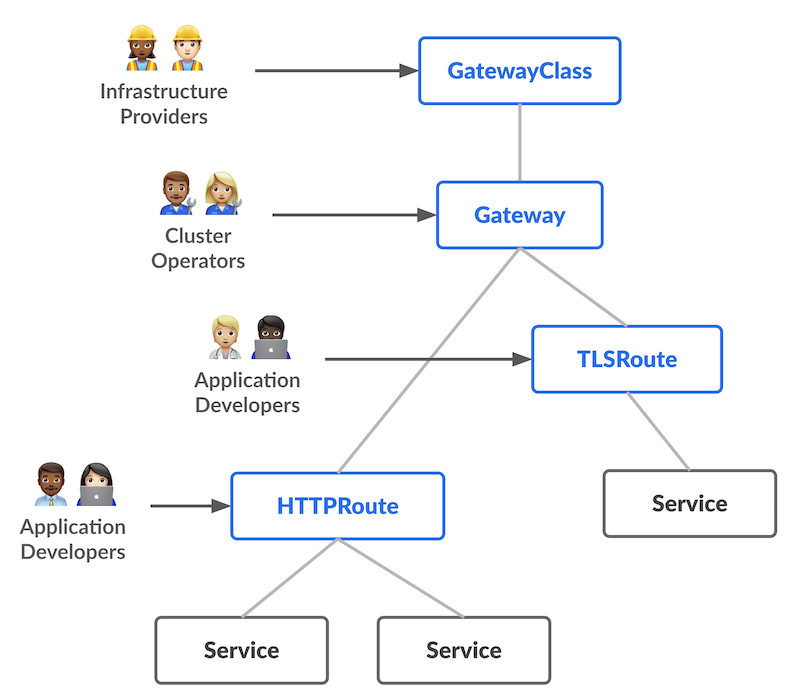
|
||||
|
||||
---
|
||||
|
||||
## Gateway API resources
|
||||
|
||||
- `Service` = our good old Kubernetes service
|
||||
|
||||
- `HTTPRoute` = describes which requests should go to which `Service`
|
||||
|
||||
(similar to the `Ingress` resource)
|
||||
|
||||
- `Gateway` = how traffic enters the system
|
||||
|
||||
(could correspond to e.g. a `LoadBalancer` `Service`)
|
||||
|
||||
- `GatewayClass` = represents different types of `Gateways`
|
||||
|
||||
(many gateway controllers will offer only one)
|
||||
|
||||
---
|
||||
|
||||
## `HTTPRoute` anatomy
|
||||
|
||||
- `spec.parentRefs` = where requests come from
|
||||
|
||||
- typically a single `Gateway`
|
||||
|
||||
- could be multiple `Gateway` resources
|
||||
|
||||
- can also be a `Service` (for cluster mesh uses)
|
||||
|
||||
- `spec.hostnames` = which hosts (HTTP `Host:` header) this applies to
|
||||
|
||||
- `spec.rules[].matches` = which requests this applies to (match paths, headers...)
|
||||
|
||||
- `spec.rules[].filters` = optional transformations (change headers, rewrite URI...)
|
||||
|
||||
- `spec.rules[].backendRefs` = where requests go to
|
||||
|
||||
---
|
||||
|
||||
## Minimal `HTTPRoute`
|
||||
|
||||
```yaml
|
||||
apiVersion: gateway.networking.k8s.io/v1
|
||||
kind: HTTPRoute
|
||||
metadata:
|
||||
name: xyz
|
||||
spec:
|
||||
parentRefs:
|
||||
- group: gateway.networking.k8s.io
|
||||
kind: Gateway
|
||||
name: my-gateway
|
||||
namespace: my-gateway-namespace
|
||||
hostnames: [ xyz.example.com ]
|
||||
rules:
|
||||
- backendRefs:
|
||||
- name: xyz
|
||||
port: 80
|
||||
```
|
||||
|
||||
---
|
||||
|
||||
## Gateway API in action
|
||||
|
||||
- Let's deploy Traefik in Gateway API mode!
|
||||
|
||||
- We'll use the [official Helm chart for Traefik][traefik-chart]
|
||||
|
||||
- We'll need to set a few values
|
||||
|
||||
- `providers.kubernetesGateway.enabled=true`
|
||||
|
||||
*enable Gateway API provisioning*
|
||||
|
||||
- `gateway.listeners.web.namespacePolicy.from=All`
|
||||
|
||||
*allow `HTTPRoutes` in all namespaces to refer to the default `Gateway`*
|
||||
|
||||
[traefik-chart]: https://artifacthub.io/packages/helm/traefik/traefik
|
||||
|
||||
---
|
||||
|
||||
## `LoadBalancer` vs `hostPort`
|
||||
|
||||
- If we're using a managed Kubernetes cluster, we'll use the default mode:
|
||||
|
||||
- Traefik runs with a `Deployment`
|
||||
|
||||
- Traefik `Service` has type `LoadBalancer`
|
||||
|
||||
- we connect to the `LoadBalancer` public IP address
|
||||
|
||||
- If we don't have a CCM (or `LoadBalancer` `Service`), we'll do things differently:
|
||||
|
||||
- Traefik runs with a `DaemonSet`
|
||||
|
||||
- Traefik `Service` has type `ClusterIP` (not strictly necessary but cleaner)
|
||||
|
||||
- we connect to any node's public IP address
|
||||
|
||||
---
|
||||
|
||||
## Installing Traefik (with `LoadBalancer`)
|
||||
|
||||
Install the Helm chart:
|
||||
```bash
|
||||
helm upgrade --install --namespace traefik --create-namespace \
|
||||
--repo https://traefik.github.io/charts traefik traefik \
|
||||
--version 37.1.2 \
|
||||
--set providers.kubernetesGateway.enabled=true \
|
||||
--set gateway.listeners.web.namespacePolicy.from=All \
|
||||
#
|
||||
```
|
||||
|
||||
We'll connect by using the public IP address of the load balancer:
|
||||
```bash
|
||||
kubectl get services --namespace traefik
|
||||
```
|
||||
|
||||
---
|
||||
|
||||
## Installing Traefik (with `hostPort`)
|
||||
|
||||
Install the Helm chart:
|
||||
```bash
|
||||
helm upgrade --install --namespace traefik --create-namespace \
|
||||
--repo https://traefik.github.io/charts traefik traefik \
|
||||
--version 37.1.2 \
|
||||
--set deployment.kind=DaemonSet \
|
||||
--set ports.web.hostPort=80 \
|
||||
--set ports.websecure.hostPort=443 \
|
||||
--set service.type=ClusterIP \
|
||||
--set providers.kubernetesGateway.enabled=true \
|
||||
--set gateway.listeners.web.namespacePolicy.from=All \
|
||||
#
|
||||
```
|
||||
|
||||
We'll connect by using the public IP address of any node of the cluster.
|
||||
|
||||
---
|
||||
|
||||
class: extra-details
|
||||
|
||||
## Taints and tolerations
|
||||
|
||||
- By default, Traefik Pods will respect node taints
|
||||
|
||||
- If some nodes have taints (e.g. control plane nodes) we might need tolerations
|
||||
|
||||
(if we want to run Traefik on all nodes)
|
||||
|
||||
- Adding the corresponding tolerations is left as an exercise for the reader!
|
||||
|
||||
---
|
||||
|
||||
class: extra-details
|
||||
|
||||
## Rolling updates with `hostPort`
|
||||
|
||||
- It is not possible to have two pods on the same node using the same `hostPort`
|
||||
|
||||
- Therefore, it is important to pay attention to the `DaemonSet` rolling update parameters
|
||||
|
||||
- If `maxUnavailable` is non-zero:
|
||||
|
||||
- old pods will be shutdown first
|
||||
|
||||
- new pods will start without a problem
|
||||
|
||||
- there will be a short interruption of service
|
||||
|
||||
- If `maxSurge` is non-zero:
|
||||
|
||||
- new pods will be created but won't be able to start (since the `hostPort` is taken)
|
||||
|
||||
- old pods will remain running and the rolling update will not proceed
|
||||
|
||||
---
|
||||
|
||||
## Testing our Gateway controller
|
||||
|
||||
- Send a test request to Traefik
|
||||
|
||||
(e.g. with `curl http://<ipaddress>`)
|
||||
|
||||
- For now we should get a `404 not found`
|
||||
|
||||
(as there are no routes configured)
|
||||
|
||||
---
|
||||
|
||||
## A basic HTTP route
|
||||
|
||||
- Create a basic HTTP container and expose it with a Service; e.g.:
|
||||
```bash
|
||||
kubectl create deployment blue --image jpetazzo/color --port 80
|
||||
kubectl expose deployment blue
|
||||
```
|
||||
|
||||
---
|
||||
|
||||
## A basic HTTP route
|
||||
|
||||
- Create an `HTTPRoute` with the following YAML:
|
||||
```yaml
|
||||
apiVersion: gateway.networking.k8s.io/v1
|
||||
kind: HTTPRoute
|
||||
metadata:
|
||||
name: blue
|
||||
spec:
|
||||
parentRefs:
|
||||
- group: gateway.networking.k8s.io
|
||||
kind: Gateway
|
||||
name: traefik-gateway
|
||||
namespace: traefik
|
||||
rules:
|
||||
- backendRefs:
|
||||
- name: blue
|
||||
port: 80
|
||||
```
|
||||
|
||||
- Our `curl` command should now show a response from the `blue` pod
|
||||
|
||||
---
|
||||
|
||||
class: extra-details
|
||||
|
||||
## Traefik dashboard
|
||||
|
||||
- By default, Traefik exposes a dashboard
|
||||
|
||||
(on a different port than the one used for "normal" traffic)
|
||||
|
||||
- To access it:
|
||||
```bash
|
||||
kubectl port-forward --namespace traefik daemonset/traefik 1234:8080
|
||||
```
|
||||
|
||||
(replace `daemonset` with `deployment` if necessary)
|
||||
|
||||
|
||||
- Then connect to http://localhost:1234/dashboard/ (pay attention to the final `/`!)
|
||||
|
||||
---
|
||||
|
||||
## `Core` vs `Extended` vs `Implementation-specific`
|
||||
|
||||
- All Gateway controllers must support `Core` features
|
||||
|
||||
- Some optional features are in the `Extended` set:
|
||||
|
||||
- they may or may not supported
|
||||
|
||||
- but at least, their specification is part of the API definition
|
||||
|
||||
- Gateway controllers can also have `Implementation-specific` features
|
||||
|
||||
(=proprietary extensions)
|
||||
|
||||
- In the following slides, we'll tag features with `Core` or `Extended`
|
||||
|
||||
---
|
||||
|
||||
## `HTTPRoute.spec.rules[].matches`
|
||||
|
||||
Some fields are part of the `Core` set; some are part of the `Extended` set.
|
||||
|
||||
```yaml
|
||||
match:
|
||||
path: # Core
|
||||
value: /hello
|
||||
type: PathPrefix # default value; can also be "Exact"
|
||||
headers: # Core
|
||||
- name: x-custom-header
|
||||
value: foo
|
||||
queryparams: # Extended
|
||||
- type: Exact # can also have implementation-specific values, e.g. Regex
|
||||
name: product
|
||||
value: pizza
|
||||
method: GET # Extended
|
||||
```
|
||||
|
||||
---
|
||||
|
||||
## `HTTPRoute.spec.rules[].filters.*HeaderModifier`
|
||||
|
||||
`RequestHeaderModifier` is `Core`
|
||||
|
||||
`ResponseHeaderModifier` is `Extended`
|
||||
|
||||
```yaml
|
||||
type: RequestHeaderModifier # or ResponseHeaderModifier
|
||||
requestHeaderModifier: # or responseHeaderModifier
|
||||
set: # replace an existing header
|
||||
- name: x-my-header
|
||||
value: hello
|
||||
add: # appends to an existing header
|
||||
- name: x-my-header # (adding a comma if it's already set)
|
||||
value: hello
|
||||
remove:
|
||||
- x-my-header
|
||||
```
|
||||
|
||||
---
|
||||
|
||||
## `HTTPRoute.spec.rules[].filters.RequestRedirect`
|
||||
|
||||
```yaml
|
||||
type: RequestRedirect
|
||||
requestRedirect:
|
||||
scheme: https # http or https
|
||||
hostname: newxyz.example.com
|
||||
path: /new
|
||||
port: 8080
|
||||
statusCode: 302 # default=302; can be 301 302 303 307 308
|
||||
```
|
||||
|
||||
All fields are optional. Empty fields mean "leave as is".
|
||||
|
||||
Note that while `RequestRedirect` is `Core`, some options are `Extended`!
|
||||
|
||||
(See the [API specification for details][http-request-redirect].)
|
||||
|
||||
[http-request-redirect]: https://gateway-api.sigs.k8s.io/reference/spec/#httprequestredirectfilter
|
||||
|
||||
---
|
||||
|
||||
## `HTTPRoute.spec.rules[].filters.URLRewrite`
|
||||
|
||||
```yaml
|
||||
type: URLRewrite
|
||||
urlRewrite:
|
||||
hostname: newxyz.example.com
|
||||
path: /new
|
||||
```
|
||||
|
||||
`hostname` will rewrite the HTTP `Host:` header.
|
||||
|
||||
This is an `Extended` feature.
|
||||
|
||||
It conflicts with `HTTPRequestRedirect`.
|
||||
|
||||
---
|
||||
|
||||
## `HTTPRoute.spec.rules[].filters.RequestMirror`
|
||||
|
||||
This is an `Extended` feature. It sends a copy of all (or a fraction) of requests to another backend. Responses from the mirrored backend are ignored.
|
||||
|
||||
```yaml
|
||||
type: RequestMirror
|
||||
requestMirror:
|
||||
percent: 10
|
||||
fraction:
|
||||
numerator: 1
|
||||
denominator: 10
|
||||
backendRef:
|
||||
group: "" # default
|
||||
kind: Service # default
|
||||
name: log-some-requests
|
||||
namespace: my-observability-namespace # defaults to same namespace
|
||||
port: 80
|
||||
hostname: newxyz.example.com
|
||||
```
|
||||
|
||||
Specify `percent` or `fraction`, not both. If neither is specified, all requests get mirrored.
|
||||
|
||||
---
|
||||
|
||||
## Other routes
|
||||
|
||||
- `GRPCRoute` can use GRPC services and methods to route requests
|
||||
|
||||
*this is useful if you're using GRPC; otherwise you can ignore it!*
|
||||
|
||||
- `TLSRoute` can use SNI header to route requests (without decrypting traffic)
|
||||
|
||||
*this is useful to host multiple TLS services on a single address with end-to-end encryption*
|
||||
|
||||
- `TCPRoute` can route TCP connections
|
||||
|
||||
*this is useful to colocate multiple protocols on the same address, e.g. HTTP+HTTPS+SSH*
|
||||
|
||||
- `UDPRoute` can route UDP packets
|
||||
|
||||
*ditto, e.g. for DNS/UDP, DNS/TCP, DNS/HTTPS*
|
||||
|
||||
---
|
||||
|
||||
## `gateway.spec.listeners.allowedRoutes`
|
||||
|
||||
- With `Ingress`, any `Ingress` resource can "catch" traffic
|
||||
|
||||
- This could be a problem e.g. if a dev/staging environment accidentally (or maliciously) creates an `Ingress` with a production hostname
|
||||
|
||||
- Gateway API introduces guardrails
|
||||
|
||||
- A `Gateway` can indicate if it can be referred by routes:
|
||||
|
||||
- from all namespaces (like with `Ingress`)
|
||||
|
||||
- only from the same namespace
|
||||
|
||||
- only from specific namespaces matching a selector
|
||||
|
||||
- That's why we specified `gateway.listeners.web.namespacePolicy.from=All` when deploying Traefik
|
||||
|
||||
???
|
||||
|
||||
:EN:- The Gateway API
|
||||
:FR:- La Gateway API
|
||||
|
||||
@@ -171,12 +171,10 @@ Note: it might take a minute or two for the worker to start.
|
||||
|
||||
- save successive revisions, allowing us to rollback
|
||||
|
||||
[Helm docs][helm-labels] and [Kubernetes docs][k8s-labels]
|
||||
[Helm docs](https://helm.sh/docs/topics/chart_best_practices/labels/)
|
||||
and [Kubernetes docs](https://kubernetes.io/docs/concepts/overview/working-with-objects/common-labels/)
|
||||
have details about recommended annotations and labels.
|
||||
|
||||
[helm-labels]: https://helm.sh/docs/chart_best_practices/labels/
|
||||
[k8s-labels]: https://kubernetes.io/docs/concepts/overview/working-with-objects/common-labels/
|
||||
|
||||
---
|
||||
|
||||
## Cleaning up
|
||||
|
||||
@@ -18,7 +18,51 @@
|
||||
|
||||
---
|
||||
|
||||
## Helm features
|
||||
## From `kubectl run` to YAML
|
||||
|
||||
- We can create resources with one-line commands
|
||||
|
||||
(`kubectl run`, `kubectl create deployment`, `kubectl expose`...)
|
||||
|
||||
- We can also create resources by loading YAML files
|
||||
|
||||
(with `kubectl apply -f`, `kubectl create -f`...)
|
||||
|
||||
- There can be multiple resources in a single YAML files
|
||||
|
||||
(making them convenient to deploy entire stacks)
|
||||
|
||||
- However, these YAML bundles often need to be customized
|
||||
|
||||
(e.g.: number of replicas, image version to use, features to enable...)
|
||||
|
||||
---
|
||||
|
||||
## Beyond YAML
|
||||
|
||||
- Very often, after putting together our first `app.yaml`, we end up with:
|
||||
|
||||
- `app-prod.yaml`
|
||||
|
||||
- `app-staging.yaml`
|
||||
|
||||
- `app-dev.yaml`
|
||||
|
||||
- instructions indicating to users "please tweak this and that in the YAML"
|
||||
|
||||
- That's where using something like
|
||||
[CUE](https://github.com/cue-labs/cue-by-example/tree/main/003_kubernetes_tutorial),
|
||||
[Kustomize](https://kustomize.io/),
|
||||
or [Helm](https://helm.sh/) can help!
|
||||
|
||||
- Now we can do something like this:
|
||||
```bash
|
||||
helm install app ... --set this.parameter=that.value
|
||||
```
|
||||
|
||||
---
|
||||
|
||||
## Other features of Helm
|
||||
|
||||
- With Helm, we create "charts"
|
||||
|
||||
@@ -226,7 +270,7 @@ class: extra-details
|
||||
|
||||
]
|
||||
|
||||
Then go to → https://artifacthub.io/packages/helm/securecodebox/juice-shop
|
||||
Then go to → https://artifacthub.io/packages/helm/seccurecodebox/juice-shop
|
||||
|
||||
---
|
||||
|
||||
|
||||