mirror of
https://github.com/fluxcd/flagger.git
synced 2026-03-02 01:30:48 +00:00

178 lines
6.9 KiB
Markdown
178 lines
6.9 KiB
Markdown
# flagger
|
|
|
|
[](https://travis-ci.org/stefanprodan/flagger)
|
|
[](https://goreportcard.com/report/github.com/stefanprodan/flagger)
|
|
[](https://codecov.io/gh/stefanprodan/flagger)
|
|
[](https://github.com/stefanprodan/flagger/blob/master/LICENSE)
|
|
[](https://github.com/stefanprodan/flagger/releases)
|
|
|
|
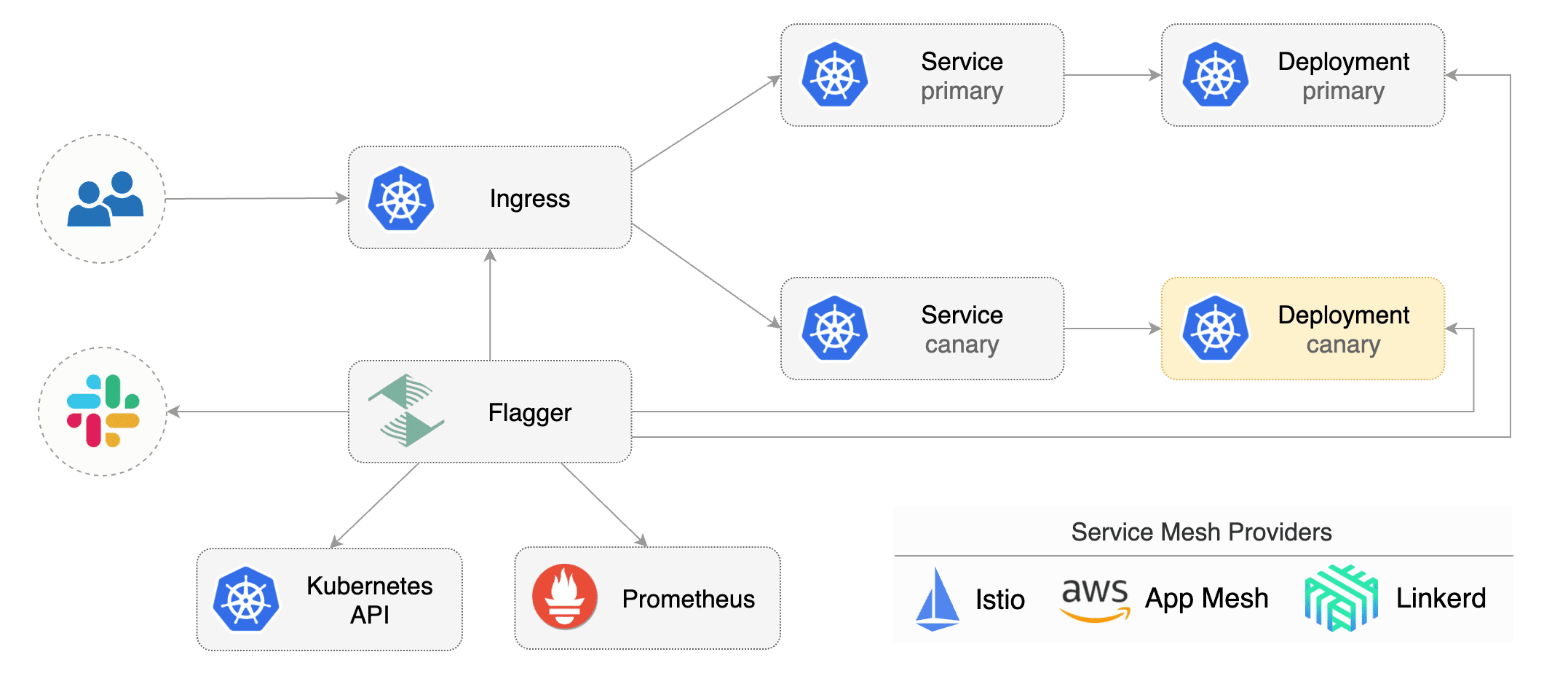
Flagger is a Kubernetes operator that automates the promotion of canary deployments
|
|
using Istio routing for traffic shifting and Prometheus metrics for canary analysis.
|
|
The canary analysis can be extended with webhooks for running acceptance tests,
|
|
load tests or any other custom validation.
|
|
|
|
Flagger implements a control loop that gradually shifts traffic to the canary while measuring key performance
|
|
indicators like HTTP requests success rate, requests average duration and pods health.
|
|
Based on analysis of the KPIs a canary is promoted or aborted, and the analysis result is published to Slack.
|
|
|
|
|
|
|
|
### Documentation
|
|
|
|
Flagger documentation can be found at [docs.flagger.app](https://docs.flagger.app)
|
|
|
|
* Install
|
|
* [Flagger install on Kubernetes](https://docs.flagger.app/install/flagger-install-on-kubernetes)
|
|
* [Flagger install on GKE](https://docs.flagger.app/install/flagger-install-on-google-cloud)
|
|
* How it works
|
|
* [Canary custom resource](https://docs.flagger.app/how-it-works#canary-custom-resource)
|
|
* [Virtual Service](https://docs.flagger.app/how-it-works#virtual-service)
|
|
* [Canary deployment stages](https://docs.flagger.app/how-it-works#canary-deployment)
|
|
* [Canary analysis](https://docs.flagger.app/how-it-works#canary-analysis)
|
|
* [HTTP metrics](https://docs.flagger.app/how-it-works#http-metrics)
|
|
* [Custom metrics](https://docs.flagger.app/how-it-works#custom-metrics)
|
|
* [Webhooks](https://docs.flagger.app/how-it-works#webhooks)
|
|
* [Load testing](https://docs.flagger.app/how-it-works#load-testing)
|
|
* Usage
|
|
* [Canary promotions and rollbacks](https://docs.flagger.app/usage/progressive-delivery)
|
|
* [Monitoring](https://docs.flagger.app/usage/monitoring)
|
|
* [Alerting](https://docs.flagger.app/usage/alerting)
|
|
* Tutorials
|
|
* [Canary deployments with Helm charts and Weave Flux](https://docs.flagger.app/tutorials/canary-helm-gitops)
|
|
|
|
### Install
|
|
|
|
Before installing Flagger make sure you have Istio setup up with Prometheus enabled.
|
|
If you are new to Istio you can follow my [Istio service mesh walk-through](https://github.com/stefanprodan/istio-gke).
|
|
|
|
Deploy Flagger in the `istio-system` namespace using Helm:
|
|
|
|
```bash
|
|
# add the Helm repository
|
|
helm repo add flagger https://flagger.app
|
|
|
|
# install or upgrade
|
|
helm upgrade -i flagger flagger/flagger \
|
|
--namespace=istio-system \
|
|
--set metricsServer=http://prometheus.istio-system:9090
|
|
```
|
|
|
|
Flagger is compatible with Kubernetes >1.11.0 and Istio >1.0.0.
|
|
|
|
### Canary CRD
|
|
|
|
Flagger takes a Kubernetes deployment and optionally a horizontal pod autoscaler (HPA),
|
|
then creates a series of objects (Kubernetes deployments, ClusterIP services and Istio virtual services).
|
|
These objects expose the application on the mesh and drive the canary analysis and promotion.
|
|
|
|
Flagger keeps track of ConfigMaps and Secrets referenced by a Kubernetes Deployment and triggers a canary analysis if any of those objects change.
|
|
When promoting a workload in production, both code (container images) and configuration (config maps and secrets) are being synchronised.
|
|
|
|
For a deployment named _podinfo_, a canary promotion can be defined using Flagger's custom resource:
|
|
|
|
```yaml
|
|
apiVersion: flagger.app/v1alpha3
|
|
kind: Canary
|
|
metadata:
|
|
name: podinfo
|
|
namespace: test
|
|
spec:
|
|
# deployment reference
|
|
targetRef:
|
|
apiVersion: apps/v1
|
|
kind: Deployment
|
|
name: podinfo
|
|
# the maximum time in seconds for the canary deployment
|
|
# to make progress before it is rollback (default 600s)
|
|
progressDeadlineSeconds: 60
|
|
# HPA reference (optional)
|
|
autoscalerRef:
|
|
apiVersion: autoscaling/v2beta1
|
|
kind: HorizontalPodAutoscaler
|
|
name: podinfo
|
|
service:
|
|
# container port
|
|
port: 9898
|
|
# Istio gateways (optional)
|
|
gateways:
|
|
- public-gateway.istio-system.svc.cluster.local
|
|
# Istio virtual service host names (optional)
|
|
hosts:
|
|
- podinfo.example.com
|
|
# HTTP match conditions (optional)
|
|
match:
|
|
- uri:
|
|
prefix: /
|
|
# HTTP rewrite (optional)
|
|
rewrite:
|
|
uri: /
|
|
# timeout for HTTP requests (optional)
|
|
timeout: 5s
|
|
# retry policy when a HTTP request fails (optional)
|
|
retries:
|
|
attempts: 3
|
|
# promote the canary without analysing it (default false)
|
|
skipAnalysis: false
|
|
# define the canary analysis timing and KPIs
|
|
canaryAnalysis:
|
|
# schedule interval (default 60s)
|
|
interval: 1m
|
|
# max number of failed metric checks before rollback
|
|
threshold: 10
|
|
# max traffic percentage routed to canary
|
|
# percentage (0-100)
|
|
maxWeight: 50
|
|
# canary increment step
|
|
# percentage (0-100)
|
|
stepWeight: 5
|
|
# Istio Prometheus checks
|
|
metrics:
|
|
# builtin Istio checks
|
|
- name: istio_requests_total
|
|
# minimum req success rate (non 5xx responses)
|
|
# percentage (0-100)
|
|
threshold: 99
|
|
interval: 1m
|
|
- name: istio_request_duration_seconds_bucket
|
|
# maximum req duration P99
|
|
# milliseconds
|
|
threshold: 500
|
|
interval: 30s
|
|
# custom check
|
|
- name: "kafka lag"
|
|
threshold: 100
|
|
query: |
|
|
avg_over_time(
|
|
kafka_consumergroup_lag{
|
|
consumergroup=~"podinfo-consumer-.*",
|
|
topic="podinfo"
|
|
}[1m]
|
|
)
|
|
# external checks (optional)
|
|
webhooks:
|
|
- name: load-test
|
|
url: http://flagger-loadtester.test/
|
|
timeout: 5s
|
|
metadata:
|
|
cmd: "hey -z 1m -q 10 -c 2 http://podinfo.test:9898/"
|
|
```
|
|
|
|
For more details on how the canary analysis and promotion works please [read the docs](https://docs.flagger.app/how-it-works).
|
|
|
|
### Roadmap
|
|
|
|
* Add A/B testing capabilities using fixed routing based on HTTP headers and cookies match conditions
|
|
* Integrate with other service mesh technologies like AWS AppMesh and Linkerd v2
|
|
* Add support for comparing the canary metrics to the primary ones and do the validation based on the derivation between the two
|
|
|
|
### Contributing
|
|
|
|
Flagger is Apache 2.0 licensed and accepts contributions via GitHub pull requests.
|
|
|
|
When submitting bug reports please include as much details as possible:
|
|
* which Flagger version
|
|
* which Flagger CRD version
|
|
* which Kubernetes/Istio version
|
|
* what configuration (canary, virtual service and workloads definitions)
|
|
* what happened (Flagger, Istio Pilot and Proxy logs)
|